Quick Facts
- Official Name: Class 923 Shinkansen (Diagnostic Train)
- Operating Speed: 270 km/h (168 mph), matching the top speed of the Nozomi service.
- Frequency: Approximately once every 10 days; no public schedule is released.
- Purpose: Inspecting overhead wires, track alignment, and signaling systems.
- Retirement Status: JR Central’s fleet retired in January 2025; JR West’s fleet will retire in 2027.
- Successor: N700S passenger trains equipped with advanced LiDAR and 3D sensors.
The Legend of the Golden Bullet
For most travelers standing on the platforms of Tokyo or Shin-Osaka Station, the Shinkansen is a study in monochromatic efficiency—a sleek, white-and-blue blur that moves with a clockwork precision that has defined Japanese industry for six decades. But every so often, a different kind of ghost haunts the tracks. It arrives without announcement on the digital departure boards, its vibrant canary-yellow livery cutting through the sea of standard commuters like a bolt of lightning.
This is "Doctor Yellow."
To the Japanese public, spotting this elusive train is widely considered a stroke of immense good luck. Because it never appears on official timetables, catching a glimpse of it is a serendipitous event that feels like winning a small lottery. Yet, beneath the myth and the bright paint lies a critical engineering purpose. Doctor Yellow is a high-speed diagnostic Shinkansen that monitors track alignment and overhead wire conditions at speeds of 270 km/h to ensure the safety and punctuality of Japan's rail network. It is the "Golden Guardian" of the Tokaido and Sanyo lines, performing the invisible labor that keeps the world’s busiest high-speed rail line running without a single passenger fatality due to derailment or collision in its entire history.
The Technical Mission: Science at 270 km/h
The Shinkansen network is a masterpiece of tolerances measured in millimeters. At 270 km/h (168 mph), even the slightest deviation in track level or a frayed overhead wire can lead to significant wear or safety risks. While standard maintenance trains usually operate at night when the tracks are closed, Doctor Yellow is unique because it performs comprehensive diagnostic sweeps during regular operational hours.
Inside its seven cars, you won't find rows of plush seats or trolley services. Instead, the interior is a laboratory on wheels.
- Optical Sensors & LiDAR: High-speed cameras and laser sensors scan the overhead catenary wires to ensure they are at the correct height and tension.
- Track Monitoring: Specialized bogies measure the gauge (distance between rails) and the vertical/horizontal alignment of the tracks.
- The "Observation Dome": Car 4 features a small "skylight" or dome where technicians can visually inspect the pantographs—the arms that draw power from the wires—as they spark and hum at full speed.
The fleet currently consists of two sets: the 923-0 (operated by JR Central) and the 923-3000 (operated by JR West). While they look identical to the casual observer, rail enthusiasts—known as densha otaku—can distinguish them by their subtle differences in undercarriage equipment and lighting configurations.
Why is Doctor Yellow Retiring?
For decades, the idea of a dedicated inspection train was the gold standard of rail maintenance. However, as Japan pushes toward "Shinkansen 2.0," the need for a separate, non-passenger vehicle has diminished.
The iconic Doctor Yellow is retiring because newer N700S passenger trains are now equipped with integrated sensors and LiDAR, allowing for real-time inspections during regular service. This technological leap represents a shift from periodic checks to constant monitoring. Rather than a "doctor" visiting the tracks once every 10 days, the entire fleet is now becoming its own diagnostic team.
"The N700S allows us to collect data every single day, rather than waiting for a dedicated run," a JR Central spokesperson noted. "This provides a higher frequency of data, allowing for predictive maintenance that can spot a problem before it even begins to form."
By embedding these sensors into standard passenger trains, the rail companies can retire the specialized Doctor Yellow fleet, saving on maintenance costs while actually increasing the safety oversight of the lines.
The Retirement Timeline: Your Last Chance to See It
The sunset of the Golden Bullet is a phased process, creating a narrow window for travelers and photographers to capture a piece of history.
- JR Central (T5 Set): This set officially reached the end of its operational life in January 2025.
- JR West (T4 Set): This set is scheduled for decommissioning in 2027.
This means that for the next two years, only one Doctor Yellow will remain in service on the Tokaido and Sanyo Shinkansen lines. As we approach 2027, expect the crowds at stations like Tokyo and Nagoya to grow as fans prepare to say a final sayonara to this railway icon.
How to Spot Doctor Yellow: Tips for the 'Densha Otaku'
Since there is no public timetable, spotting Doctor Yellow requires a mix of detective work and social media savvy. While there is no public timetable, Doctor Yellow typically operates once every 10 days between Tokyo and Hakata, with its movements often tracked by 'densha otaku' on social media.
Here is the "insider" method for tracking the phantom:
- The Two-Day Cycle: Doctor Yellow usually follows a "Nozomi" pattern—the fastest service route. It typically performs a "Down" run (Tokyo to Hakata) on Day 1, and an "Up" run (Hakata to Tokyo) on Day 2.
- Monitor X (formerly Twitter): This is your most powerful tool. Search for the hashtag #ドクターイエロー (Doctor Yellow in Japanese). Enthusiasts at Tokyo Station will often post photos the moment the train arrives at Platform 18 or 19. If you see a post saying it just left Tokyo, you can estimate its arrival at Nagoya (~1 hour 40 mins later) or Kyoto (~2 hours 15 mins later).
- Dedicated Tracking Sites: Websites like "Dr. Yellow Prediction" (often in Japanese) aggregate sightings to predict the next run based on historical 10-day intervals.
- Platform Indicators: Look for "Out of Service" (回送, Kaiso) or "Non-Passenger" notices on the electronic boards that don't match the usual 5-minute interval of the white trains.
Best Photography Spots and Stations
If you are lucky enough to be in Japan when a run is predicted, these are the prime locations to set up your camera:
- Tokyo Station (Platforms 18/19): This is the best place for stationary shots. Because it's the terminus, the train often sits for 15–20 minutes, allowing for close-ups of the specialized sensors and the iconic yellow nose.
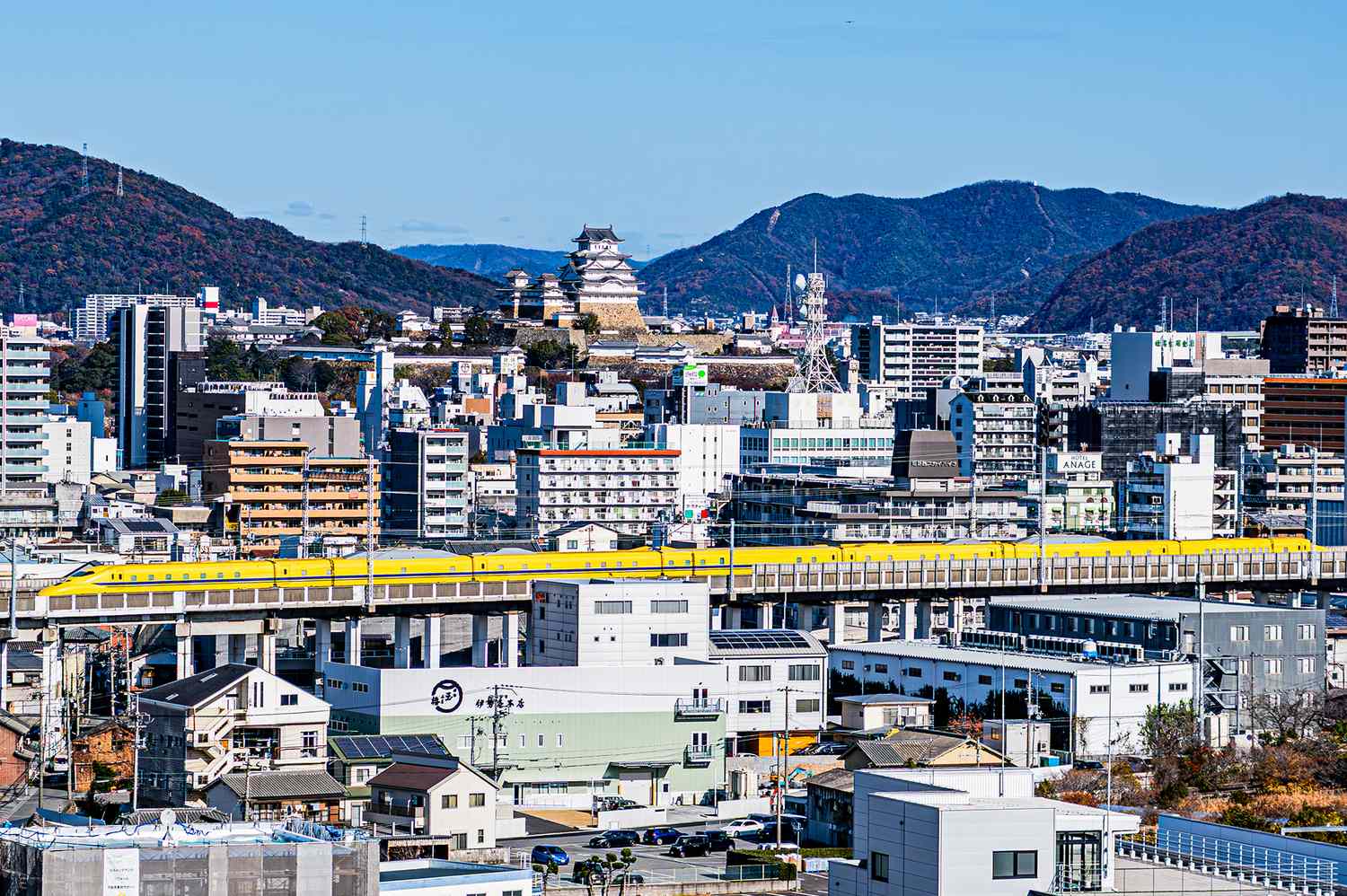
- Himeji Station: A favorite for photographers. You can capture the vibrant yellow train streaking past the white walls of Himeji Castle (the "White Heron"), creating a stunning color contrast of modern tech against feudal history.
- Tegarayama Heiwa Park (Himeji): This elevated viewpoint near the city’s aquarium offers a panoramic view of the Shinkansen tracks, perfect for long-lens "action" shots.
- The "Double Yellow" or "Pink-and-Yellow": If your timing is legendary, you might catch Doctor Yellow passing the Hello Kitty Shinkansen (a pink-and-white 500 series) near Okayama or Hiroshima. These "miracle sightings" are the holy grail of Japanese rail photography.
FAQs
Q: Can I buy a ticket to ride Doctor Yellow?
A: No. Doctor Yellow is a strictly non-passenger diagnostic vehicle. Only specialized JR engineers and maintenance staff are allowed on board.
Q: Will there be a "New" Doctor Yellow?
A: Not in the traditional sense. While the N700S will take over its diagnostic duties, it will look like a standard white-and-blue passenger train. The "Yellow" era is effectively ending with the current fleet's retirement.
Q: Does Doctor Yellow run at night?
A: Occasionally, it performs "Kodama" (all-station) inspections at night, but its primary diagnostic sweeps are conducted during the day to monitor the infrastructure under the stress of regular operational loads.
Conclusion
The retirement of Doctor Yellow marks the end of an era where human-operated diagnostic trains were the primary sentinels of the tracks. As we move toward a future of integrated LiDAR and AI-driven maintenance, the "Phantom Shinkansen" will transition from a working vehicle to a museum legend.
If you find yourself on a platform in Japan over the next two years, keep your eyes peeled for that flash of gold. You aren't just seeing a train; you’re witnessing the final laps of a machine that, for decades, has been the silent guardian of the world’s most perfect railway.