Quick Facts
- Climate: Tropical humidity ranging from 65% to 90% with average temperatures between 24°C (75°F) and 35°C (95°F).
- Temple Dress Code: Shoulders and knees must be strictly covered to enter religious sites and the Angkor Archaeological Park.
- Best Fabric: Linen and lightweight synthetics are superior to cotton in the high humidity.
- Footwear: Closed-toe walking shoes or lightweight hikers with strong traction are recommended for temple terrain.
- Safety: Anti-theft cross-body bags are essential for preventing opportunistic bag snatching in urban areas.
- Power: Sockets vary between Type A, C, and G; a universal travel adapter and portable power bank are required.
When building your cambodia packing list, prioritize linen fabrics that cover knees and shoulders for temple sites. Given the 90% humidity, moisture-wicking gear and closed-toe shoes are essential for comfortable navigation of Angkor Wat and urban Phnom Penh. For a first-timer's cambodia packing list, the non-negotiables are modest clothing for temples and high-SPF sunscreen without whitening agents.
1. Mastering the Temple Dress Code
Stepping into the Angkor Archaeological Park is a journey into the heart of Khmer identity, but it requires a specific level of decorum. The Angkor Archaeological Park strictly enforces a dress code requiring all visitors to have their shoulders and knees covered. This is not merely a suggestion; it is a sign of respect for local tradition, and ignoring it will result in being denied entry at the checkpoints.
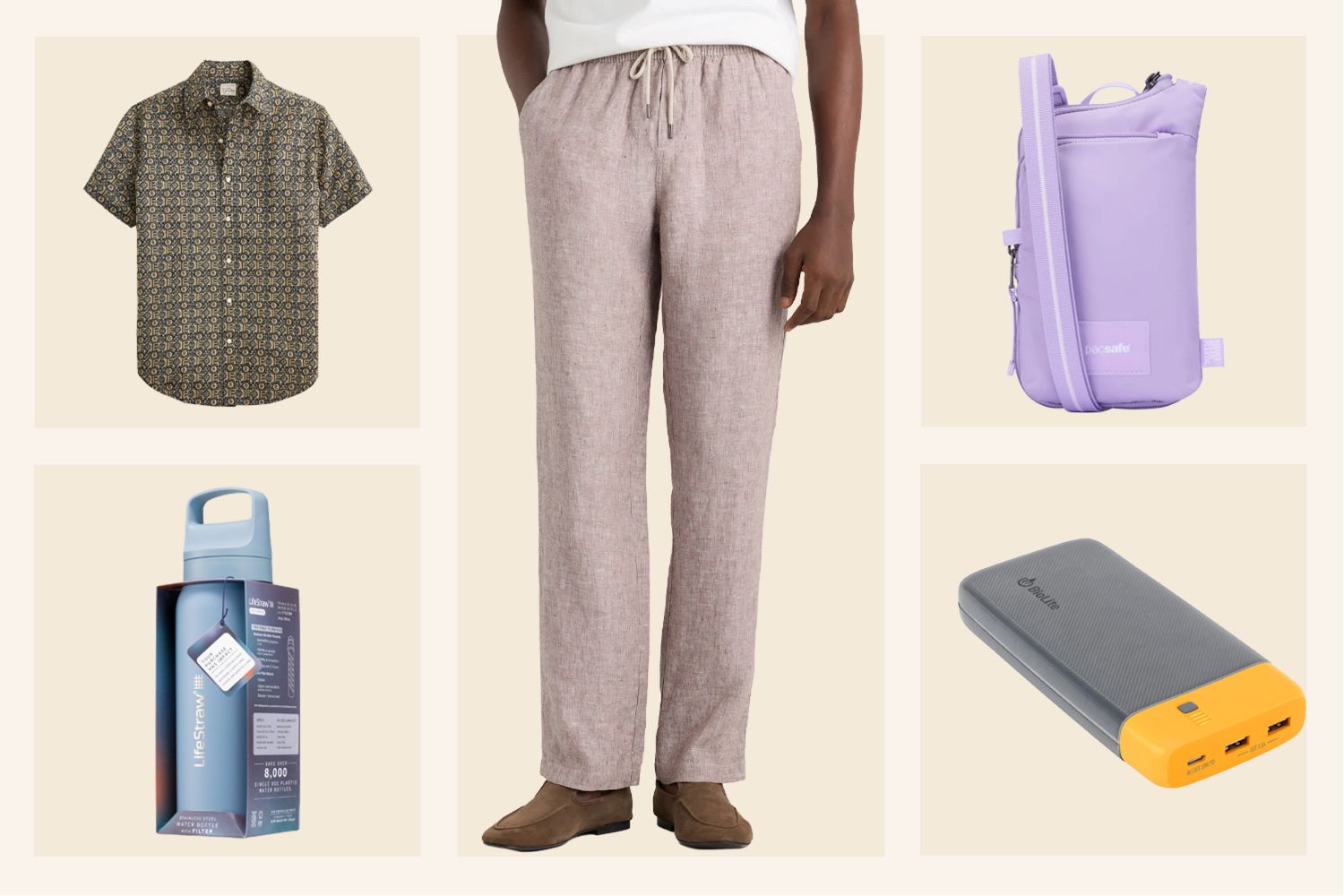
Many first-time travelers assume they can simply throw a scarf or shawl over a tank top once they reach the temple entrance. However, for the upper levels of Angkor Wat (the Bakan sanctuary), temporary covers like scarves or shawls are often not permitted for access. It is far better to wear a lightweight, short-sleeved t-shirt or a linen button-down that remains culturally respectful throughout the day. For the lower half, loose-fitting trousers or skirts that fall below the knee are the gold standard. While the famous elephant pants sold at local markets are an option, investing in high-quality linen trousers before you arrive will offer better durability and breathability.
2. Fabric Science: Why Linen Beats Cotton
Understanding the physics of moisture is key to surviving your first trip to Southeast Asia travel destinations. Cambodia maintains a tropical climate with high humidity ranging from 65% to 90%, which means the air often feels like a warm, damp weight. In these conditions, traditional cotton is your enemy. Cotton is a hydrophilic fiber; it absorbs sweat but holds onto it, becoming heavy, translucent, and uncomfortable.
Linen and technical synthetics, on the other hand, provide excellent tropical humidity management. Linen has a natural ability to wick moisture away from the skin and dries much faster than cotton. This becomes especially important when transitioning from the sweltering outdoor heat (which can reach up to 40°C or 104°F in March and April) to the freezing air conditioning of a museum or hotel lobby. Breathable fabrics help regulate your body temperature, reducing the risk of heat prickly rash and general fatigue. When considering what to wear in cambodia in january, which is the peak of the dry season, don't be fooled by the slightly cooler mornings; the midday sun is still intense, making linen and breathable fabrics your best defense.
3. Footwear: The Protection vs. Heat Dilemma
The debate over sandals versus shoes is a common one for those building a packing list for vietnam and cambodia. While local Cambodians often wear flip-flops, first-timers should prioritize protection. The terrain at temples like Ta Prohm or Beng Mealea is uneven, often covered in moss, and involves climbing steep, narrow stone steps. For these environments, closed-toe walking shoes or lightweight hikers with strong traction are essential.
Beyond stability, closed shoes protect you from environmental hazards. These include everything from aggressive mosquitoes that congregate near temple foundations to the fine, orange dust of the rural roads. However, there is a practical catch: you must remove your shoes when entering homes and the inner sanctums of active pagodas. Therefore, the best shoes for walking in cambodia are those that offer support but are easy to slip on and off. Look for styles with elastic laces or low-profile hiking sneakers that don't require ten minutes of lacing every time you visit a shrine.
| Footwear Type | Best For | Why? |
|---|---|---|
| Lightweight Hikers | Angkor Archaeological Park | Better grip on slippery, ancient stones and uneven terrain. |
| Slip-on Sneakers | Urban exploration / Pagodas | Convenience during frequent shoe removal at sacred sites. |
| Technical Sandals | Beach areas (Koh Rong) | Breathable and water-resistant for coastal environments. |
4. Seasonal Adaptations: Dust vs. Mud
Your packing strategy must shift depending on when you travel. When deciding what to pack for cambodia in november, you are essentially preparing for the onset of the dry season. During this time, the primary challenge is the dust. Riding in a tuk-tuk on unpaved roads in Siem Reap or rural Battambang will leave you covered in a fine layer of silt. A lightweight neck gaiter is invaluable here; it can be pulled up to protect your nose and mouth from dust and exhaust fumes.
If you are traveling during the monsoon (May to October), the challenge shifts to mud and sudden, torrential downpours. A heavy raincoat is a mistake; you will simply sweat underneath it. Instead, pack a lightweight rain poncho or a packable rain shell with underarm vents. A small microfiber travel towel is also a lifesaver during the monsoon season for drying off after a sudden deluge or wiping down a wet tuk-tuk seat.
5. First-Timer Health & Hygiene Kit
Health preparedness in Cambodia is about prevention. Mosquitoes are more than just a nuisance; they are carriers for Dengue fever. An effective mosquito repellent with DEET is a mandatory inclusion in your packing list for cambodia. While natural sprays are available, they often struggle against the persistence of local insects during the twilight hours.
Heat exhaustion is another significant risk for first-timers unaccustomed to the humidity. Along with a filtered water bottle to ensure safe hydration while reducing plastic waste, you should pack electrolyte replacement salts. Adding these to your water once a day helps replenish minerals lost through constant sweating. Additionally, consider a small bottle of high-SPF sunscreen. Be aware that many local sunscreens in Cambodia contain whitening agents, so it is safer to bring your preferred brand from home.
6. Essential Electronics & Power Strategies
The Cambodian power grid can be temperamental. In larger cities like Phnom Penh, power outages are less frequent than they used to be, but they still occur. A high-capacity portable power bank is essential electronics and power gadgets for cambodia for keeping your phone charged while using GPS throughout a long day of exploring.
Regarding plugs, Cambodia is a bit of a Wild West. You will encounter Type A (US style), Type C (European style), and occasionally Type G (UK style). A universal travel adapter is the only way to ensure you can charge your devices regardless of whether you are in a boutique hotel or a rural homestay. If you are a light sleeper, noise-canceling earplugs are also highly recommended. Cambodian life is loud—from early morning temple chants to construction and late-night weddings, the soundscape is vibrant but rarely quiet.
7. Security: Thwarting the Tuk-Tuk Snatch
Cambodia is generally safe for travelers, but petty theft, specifically bag snatching from moving tuk-tuks, is an issue in Phnom Penh and, to a lesser extent, Siem Reap. This should influence your choice of anti-theft bags for cambodia first timers.
Avoid backpacks that you wear loosely or handbags with thin straps. A cross-body bag with a slash-resistant strap is the best choice. When riding in a tuk-tuk, keep your bag on the floor between your feet or wear it across your chest with the bag itself positioned away from the "street side" of the vehicle. Never hold your phone out to take photos while the tuk-tuk is in motion, as this is the most common moment for a drive-by snatching. For your temple pass, a simple lanyard under your shirt is a practical way to keep it accessible but secure.
8. Digital Packing: Essential Apps & Connectivity
Logistics in Cambodia have been revolutionized by technology. Before you land, download Grab and PassApp. These are the local equivalents of Uber/Lyft but for tuk-tuks and cars. They provide fixed pricing, which saves you from the exhaustion of haggling and ensures the driver has a digital map of your destination.
For connectivity, don't rely on international roaming. Pick up a local SIM card (Cellcard and Smart are the leaders) at the airport for a few dollars; the data speeds are surprisingly good, even near the temples. Pair this with offline maps downloaded on Google Maps to ensure you can find your way through the labyrinthine streets of Phnom Penh even if your signal drops.
Digital Checklist
- Grab: For reliable tuk-tuk and car bookings.
- PassApp: A local alternative often used by independent drivers.
- Google Maps: Pre-downloaded "Offline Areas" for Siem Reap and Phnom Penh.
- XE Currency Converter: To manage the dual-currency system (USD and KHR).
9. The Local Must-Have: The Krama Scarf
While it’s important to pack your essentials, leave a small amount of space to acquire a Krama. This traditional checkered scarf is the unofficial symbol of Cambodia and one of the most versatile items you can own. It is a masterclass in local utility and immersion.
The Krama isn't just a fashion statement. Locals use it as a sun shield, a sweat rag, a makeshift bag, a towel, and even a sarong for bathing. For a traveler, it acts as an extra layer of sun protection for your neck during long tuk-tuk rides or a modest wrap when you need to cover up quickly. Buying one from a local weaver or a social enterprise like Rehash Trash helps support the local economy and provides you with a souvenir that is actually functional. It is the one item that truly bridges the gap between a tourist packing list and local reality.
FAQ
What are the essential items to pack for Cambodia?
The absolute essentials include modest clothing that covers shoulders and knees, a universal travel adapter for varied power sockets, a high-capacity power bank, and a high-SPF sunscreen without whitening agents. You should also prioritize a filtered water bottle and mosquito repellent with DEET.
Is there a specific dress code for visiting temples like Angkor Wat?
Yes, the Angkor Archaeological Park strictly enforces a code where shoulders and knees must be covered. You cannot wear tank tops, sleeveless shirts, or short shorts. On the upper levels of Angkor Wat, you are often required to have permanent sleeves rather than just a scarf or shawl wrapped around you.
What kind of shoes are best for traveling in Cambodia?
Closed-toe walking shoes or lightweight hikers with good traction are best for the uneven and often slippery stone surfaces of the temples. For urban areas, slip-on sneakers are practical because it is customary to remove your shoes when entering homes and certain religious areas.
Do I need a universal power adapter for Cambodia?
Yes, Cambodia uses a mix of Type A, Type C, and Type G sockets. Carrying a universal adapter ensures you can charge your devices in any accommodation, from modern hotels to remote guesthouses.
What should women wear in Cambodia to stay respectful?
Women should opt for linen trousers, long skirts, or dresses that fall below the knee. For tops, short-sleeved shirts or blouses that cover the shoulders are ideal. Carrying a lightweight sarong is a great backup, but permanent modest clothing is better for temple access.
What should I pack for the rainy season in Cambodia?
During the monsoon (May to November), pack a lightweight, breathable rain poncho and a small microfiber towel. A waterproof dry bag is also highly recommended to protect your electronics and camera gear during sudden, heavy downpours.