Quick Facts
- Sand Composition: Whitehaven Beach features a seven-kilometer stretch of sand composed of approximately 98% pure silica, which prevents the surface from retaining heat.
- Global Ranking: In the 2021 TripAdvisor Travellers' Choice Best of the Best Awards, Whitehaven Beach was ranked as the number one beach in the world.
- Geographic Location: Whitsunday Island, the largest of the 74 islands in the Whitsunday group off the Queensland coast.
- Economic Impact: The Whitsundays region generates more than $1.5 billion in annual visitor spending for the Australian economy.
- Accessibility: Remote and protected; accessible only via boat, seaplane, or helicopter with no direct road access.
- Environmental Status: Part of the Whitsunday Islands National Park, managed with strict "leave no trace" policies.
Whitehaven Beach isn't just a destination; it's a geological marvel. Located in the heart of the Whitsunday Islands, it consistently ranks atop the top 10 white sand beaches in the world. This seven-kilometer stretch of coastline is defined by its purity, its isolation, and a unique sand composition that makes it a cornerstone of any whitsunday islands beach vacation guide.
The Science of Perfection: Benefits of Silica Sand Beaches
To understand why Whitehaven Beach holds such a legendary status among white sand beaches, one must look at the science beneath their feet. Most of the world's beaches are composed of a mixture of crushed shells, coral, and volcanic rock, often containing high amounts of iron and other minerals that absorb solar radiation. Whitehaven is different. Its sand is nearly pure silica, specifically a fine-grained quartz that has been broken down over millions of years.
The geological origin of this sand remains a point of scholarly fascination. Some theories suggest the silica was brought to the island by prevailing currents from elsewhere on the Queensland coast millions of years ago, as the local rocks do not contain enough silica to account for the sheer volume found here. This high purity offers several distinct benefits of silica sand beaches that you won't find on a standard tropical shore.
First and foremost is the thermal property of the sand. Because silica does not retain heat, the beach remains cool to the touch. You can walk comfortably across the dunes even in the height of the Australian summer without footwear. Furthermore, the fine grain of the sand gives it a soft, flour-like texture that "squeaks" underfoot—a phenomenon caused by the friction of the uniform silica grains rubbing together. From a photography perspective, the high reflectivity of the white sand acts as a natural light bounce, illuminating the turquoise water and creating the high-contrast, vivid imagery that has made this the most photographed beach in Australia.
Whitehaven Beach vs. Hill Inlet: Understanding the Landscape
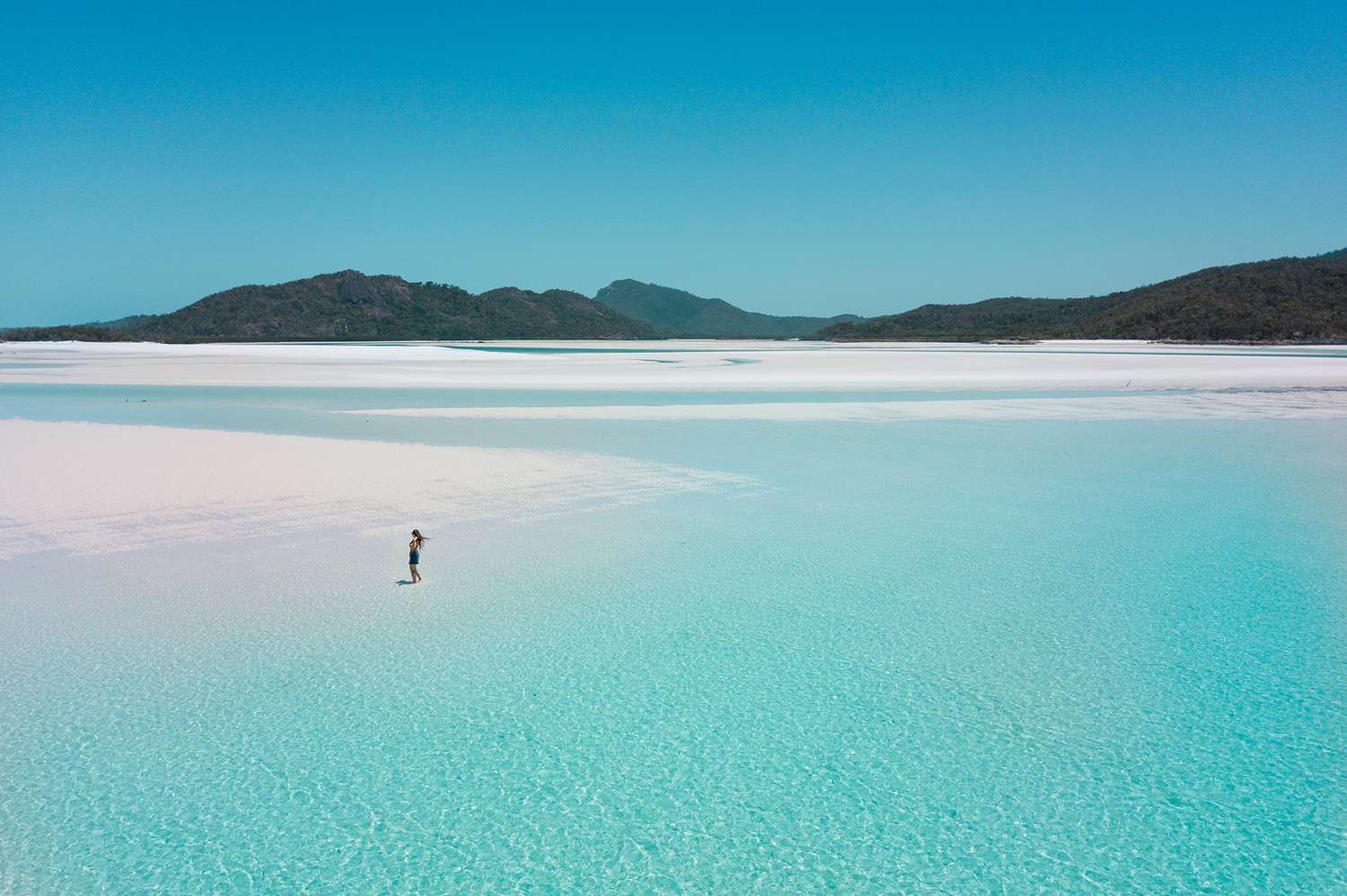
When travelers search for the best whitsunday islands beach vacation guide, they are often captivated by images of swirling blue and white patterns. It is important to distinguish between Whitehaven Beach itself and the Hill Inlet lookout, as they offer two very different experiences of this natural heritage.
Whitehaven Beach is the long, seven-kilometer expanse on the southeastern side of Whitsunday Island. This is where most visitors spend their time swimming, sunbathing, and enjoying the heat-resistant sand. However, the famous "swirls" are located at the northern end of the beach at Hill Inlet. This is a tidal lagoon where the shifting tides move the white silica sand and turquoise water to create a kaleidoscopic pattern.
The view from the Hill Inlet lookout is arguably the most iconic in the South Pacific. Following 2018 trail upgrades, the hike to the lookout points has become more accessible, offering three distinct vantage points. To see the inlet at its best, timing is everything. The swirling tides are most visible at mid-tide; at high tide, the sand is submerged, and at low tide, the water can recede enough to lose the vibrant blue contrast. For photographers, the photography vantage points here are unparalleled, especially during the middle of the day when the sun is directly overhead, penetrating the shallow water to reveal the bright white seabed below.
Logistics: How to Get to Whitehaven Beach
Because the island is a protected national park, there are no hotels or permanent structures on Whitehaven Beach. Consequently, planning how to get to whitehaven beach is the most critical part of your itinerary. Most travelers base themselves in either Airlie Beach on the mainland or on Hamilton Island.
Airlie Beach serves as the primary hub for budget-conscious travelers and those looking for variety. From here, you can find a wide range of options, including large high-speed catamarans, sailing yachts, and whitehaven beach day trip from airlie beach packages that include snorkeling stops at nearby reefs. If you are visiting whitehaven beach from hamilton island, the transit time is significantly shorter, often taking only 30 minutes by boat.
| Transport Mode | Departure Point | Duration | Best For |
|---|---|---|---|
| High-Speed Catamaran | Airlie Beach | 60–90 mins | Efficiency and comfort |
| Ocean Rafting (Powerboat) | Airlie Beach | 60 mins | Adventure and more time on the sand |
| Sailing Yacht | Airlie Beach | 2–3 hours | Relaxed pace and classic Whitsunday feel |
| Direct Ferry | Hamilton Island | 30 mins | Proximity and ease |
| Seaplane/Helicopter | Either | 15–30 mins | Aerial photography and "Heart Reef" views |
For those with a higher budget, scenic flights are highly recommended. Seeing the Great Barrier Reef from above provides a perspective on the scale of the archipelago that a boat trip cannot match. Many scenic flights include a "touch and go" or a short stay on the beach, combining aerial views of the Coral Sea with time on the ground. Private boat charters are also a popular choice for families or groups, allowing for a bespoke schedule that avoids the peak crowds of the larger tour operators.
Planning Your Trip: Best Time to Visit and What to Pack
The Whitsundays enjoy a tropical climate, but there are distinct seasonal differences that can impact your experience. The best time to visit whitehaven beach is generally during the dry season, which runs from May to October. During these months, the humidity is low, the water is clear, and the temperatures are a comfortable 22°C to 26°C.
The "green season" (November to April) brings warmer temperatures and higher humidity. While this is a great time for swimming, it is also stinger season. If you visit during the Australian summer, you will likely be required to wear a stinger suit (a thin lycra suit) to protect against Irukandji and Box jellyfish. November is also the time of the annual Whitehaven Beach Swim, a popular event where competitive swimmers take on the crystal-clear waters of the 7km stretch.
What to Pack for a Whitsunday Island Trip
- Sun Protection: The white silica sand reflects a massive amount of UV radiation. Bring reef-safe sunscreen, a wide-brimmed hat, and polarized sunglasses to cut the glare.
- Footwear: While you can walk barefoot on the sand, the hill inlet lookout hiking trail is a bush track. Sturdy sandals or walking shoes are recommended for the hike.
- Camera Gear: A circular polarizer for your lens is essential here to capture the true depth of the turquoise water.
- Water & Snacks: Most tour operators provide food, but if you are on a private charter, remember that there are no shops on the island.
- Dry Bag: Useful for keeping your electronics safe during the boat transfer or if you are wading through the shallows at the inlet.
Sustainable Tourism and Regulations
Whitehaven Beach is a masterpiece of sustainable tourism. The lack of development is intentional, preserved by the Great Barrier Reef Marine Park Authority. To maintain the untouched wilderness of the area, visitors must adhere to strict regulations.
Rules of the National Park
- No Sand Removal: It is illegal to take even a small amount of silica sand. This is a common question among tourists, and the penalties are significant. The sand is part of a delicate ecosystem and must remain on the island.
- No Domestic Animals: Dogs and other pets are prohibited to protect local birdlife and marine biodiversity.
- Waste Management: Everything you carry in must be carried out. There are no public bins on the beach.
- Smoking & Alcohol: Smoking is prohibited on the beach, and alcohol consumption is generally restricted to the vessels or designated areas provided by tour operators.
There is a small camping ground at the southern end of the beach for those who want a truly primitive experience. Camping permits must be booked well in advance through the Queensland National Parks website. This is the only way to experience the beach at sunrise and sunset after the day-trip crowds have departed, offering a rare glimpse into the silent, pristine beauty of the Queensland coast.
FAQ
What beaches have the whitest sand?
While many regions claim to have the whitest sand, Whitehaven Beach in Australia, Hyams Beach in New South Wales, and certain stretches of the Maldives are consistently cited for their high silica content. Whitehaven is unique because its 98 percent silica sand is virtually free of impurities, giving it a brilliant, almost glowing appearance compared to coral-based beaches.
Why is it illegal to collect beach sand?
Collecting sand is illegal in protected areas like the Whitsunday Islands National Park because it leads to coastal erosion and disrupts the local ecosystem. Removing sand, even in small quantities, depletes a non-renewable resource that has taken millions of years to accumulate. Authorities enforce these laws to ensure that the natural heritage of the site remains intact for future generations.
What part of Florida has white sand beaches?
Florida is famous for its white sand, particularly along the Gulf Coast. The Panhandle region, including destinations like Destin, Pensacola, and Siesta Key, is renowned for its quartz sand. Much like Whitehaven, the sand in these areas originated from quartz crystals washed down from the Appalachian Mountains, resulting in a fine, cool-to-the-touch texture.
What is the prettiest beach in the USA?
Beauty is subjective, but Siesta Key Beach in Florida and Lanikai Beach in Hawaii frequently top the lists of the prettiest beaches in the USA. Siesta Key is praised for its powdery white quartz sand, while Lanikai is celebrated for its calm turquoise waters and the scenic twin islands sitting just offshore. Both offer a different aesthetic compared to the remote, wild expanse of Whitehaven.
Whether you are arriving by a high-speed catamaran or looking down from a seaplane, Whitehaven Beach represents the pinnacle of coastal beauty. By understanding the geology, timing your visit with the tides, and respecting the environmental regulations, you ensure that this global gem remains as pristine for the next visitor as it was for the first. Regardless of where you have traveled, the first time you step onto that heat-resistant sand and look out at the Coral Sea, you will understand why it is a permanent fixture on every global bucket list.