The moon hung low over the Tyrrhenian Sea, casting a fractured silver ribbon across the water that reached toward the cliffs of Atrani. From our balcony, the only sound was the rhythmic hushing of the tide against the shore—a stark contrast to the celebratory cacophony of my son’s college graduation just a week prior. This journey, a high-speed odyssey from the salt-drenched Amalfi Coast to the labyrinthine canals of Venice, was intended as a bridge. It was the space between his childhood and the looming "real world," a final chance to move through the world together before his pace outstripped mine.
To travel from the Amalfi Coast to Venice by train is to witness the physical transformation of Italy. The journey begins at the chaotic, beating heart of Naples Centrale. From there, the high-speed rail carves a path through the rolling vineyards of Tuscany and the fertile plains of Bologna, eventually delivering you to the doorstep of Venice Santa Lucia in approximately five hours. It is a transition not just of geography, but of spirit.
Quick Facts: The Northern Odyssey
- The Route: Naples Centrale to Venice Santa Lucia (Direct high-speed).
- The Duration: Approximately 5 hours at 300km/h.
- Premium Choice: Italo Club Executive (Best value for luxury).
- The Saving: Booking Italo over Trenitalia Executive can save up to 55% (€65 vs €145).
- When to Go: The "off-season" transition (late October or April) sees 40% fewer crowds on coastal ferries.
The Amalfi Prelude: Atrani and the Art of Quietude
We began in Atrani, the smaller, more introspective sibling of Amalfi. While the world flocks to the pastel verticality of Positano, Atrani remains a cinematic pocket of authenticity. To reach our sanctuary, we climbed the famous 80 whitewashed steps, a journey that feels like stepping into a frame of Minghella’s The Talented Mr. Ripley.
Traveling during the transition to the off-season felt like a tactical victory. Statistical trends suggest that navigating the coast during this period results in approximately 40% shorter queues for coastal ferries and significantly reduced crowds in major hubs. We walked the streets without the seasonal "shuffle," finding seats at local cafes where the owners had time to linger over the history of their lemons.
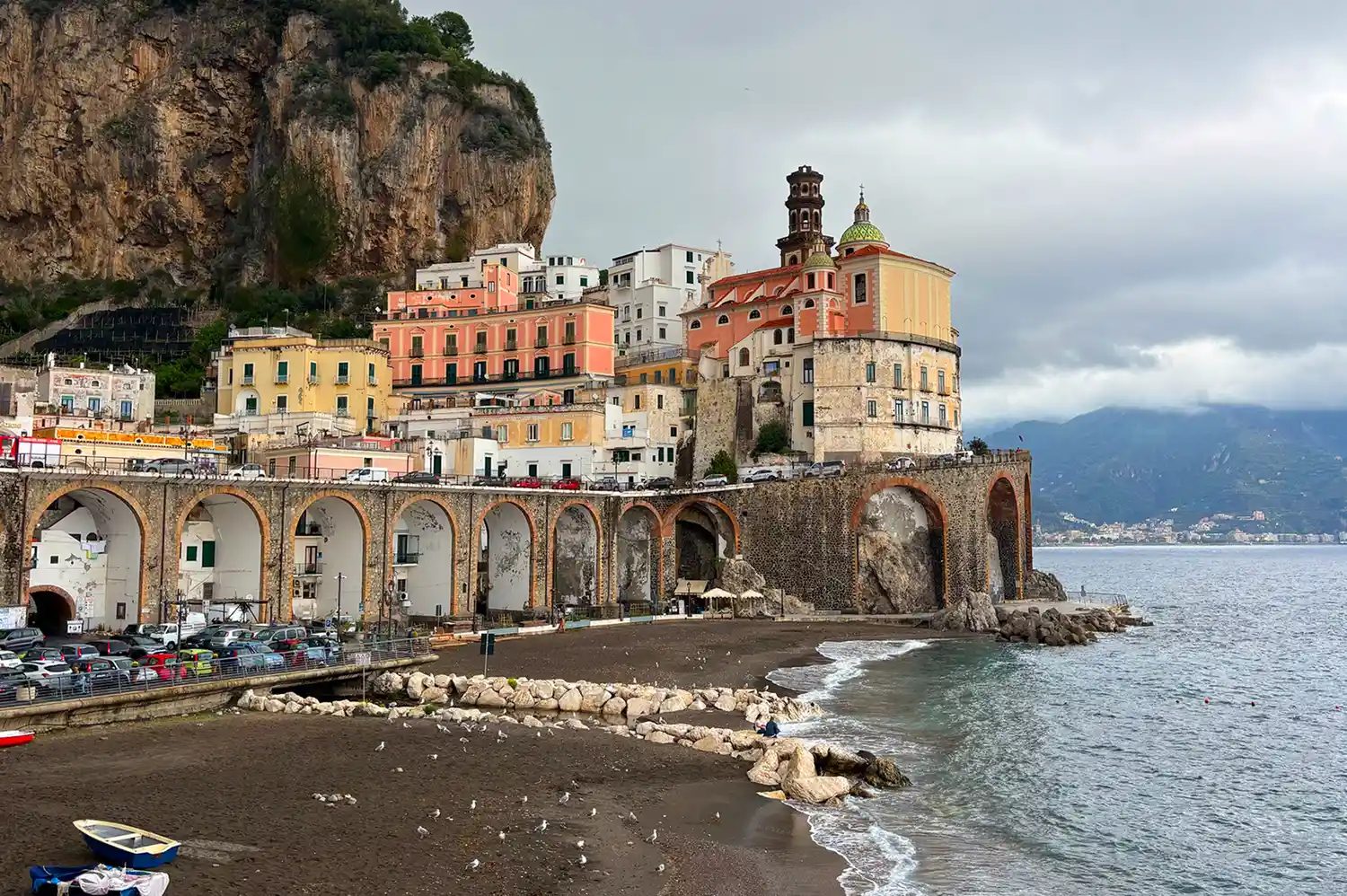
Watching my son navigate these ancient staircases, his stride confident and his eyes on the horizon, I realized that Italy train travel with adult children is less about "parenting" and more about shared discovery. We weren't just tourists; we were two men witnessing the end of an era.
Navigating the Hub: From the Coast to Naples Centrale
Leaving the coast requires a transition through the Monti Lattari. We opted for a private driver to Naples Centrale—a winding, dizzying climb that offers one last look at the Mediterranean before the urban grit of Naples takes hold.
Naples Centrale is a sensory assault: the smell of espresso, the frantic announcement of departures, and the palpable energy of a city that never rests. It is the essential starting point for any Amalfi Coast to Venice train itinerary. For a father and son seeking a moment of calm before the five-hour sprint north, the station’s premium lounges are a necessity, not a luxury.
Choosing the Right Carriage: Italo vs. Trenitalia
When planning a scenic train journey from Naples to Venice, the choice of carriage defines the experience. In Italy, two giants compete for the high-speed rails: the state-run Trenitalia (Frecciarossa) and the private Italo.
For this journey, we chose Italo’s Club Executive class. Based on current booking trends, opting for Italo Club Executive over Trenitalia Executive can save travelers up to 55% in ticket costs while still securing premium lounge access. We secured our seats for roughly €65 each, a stark contrast to the €145 typically commanded by Trenitalia’s top-tier service.
The Executive Showdown
| Feature | Italo Club Executive | Trenitalia Executive |
|---|---|---|
| Typical Price | €65 - €90 | €145 - €220 |
| Seating | 2+1 or Private 4-seat pods | 1+1 Swivel leather chairs |
| Lounge Access | Included (Lounge Italo) | Included (FrecciaLounge) |
| Onboard Meal | Gourmet snacks & espresso | Full meal service & wine |
| Best For | Value-conscious luxury | Ultimate privacy and space |
The "Lounge Italo" at Naples offered a quiet respite from the sweaty chaos of the main concourse. As we sat with our complimentary cornetti, the "fork in the road" metaphor felt apt. Behind us was the sun-drenched coast of his youth; ahead was the sophisticated, misty future of the north.
"There is a specific rhythm to the Italian high-speed rail—a low hum that bridges the gap between the ancient and the modern. It is the perfect tempo for conversations that have been put off for years."
The Scenic Odyssey: Florence, Bologna, and the Lagoon
As the train pulled out of Naples, the landscape began its slow, beautiful metamorphosis. The umbrella pines of the south gradually gave way to the rolling, silver-green olive groves of Umbria.
The onboard experience in Club Executive is designed for immersion. The Wi-Fi is remarkably reliable, allowing my son to research our Venetian dining stops, while the tradition of the caffè is maintained by a steward who brings a proper espresso to your seat in a porcelain cup.
As we bypassed Rome and sped toward Florence, I watched the change in the light. Near Bologna, the sky turned a bruised, elegant grey, and the plains stretched out in damp green expanses. This is the heart of Italy, the engine room of the country, flashing by at 300km/h.
Arriving in Venice: The Allure of Dorsoduro
The final ten minutes of the journey are the most magical. The train leaves the mainland and begins its crossing of the Venetian Lagoon. Looking out the window, you see the city rising from the navy waters like a mirage of marble and brick. It is a sensory shift that never fails to tighten the throat.
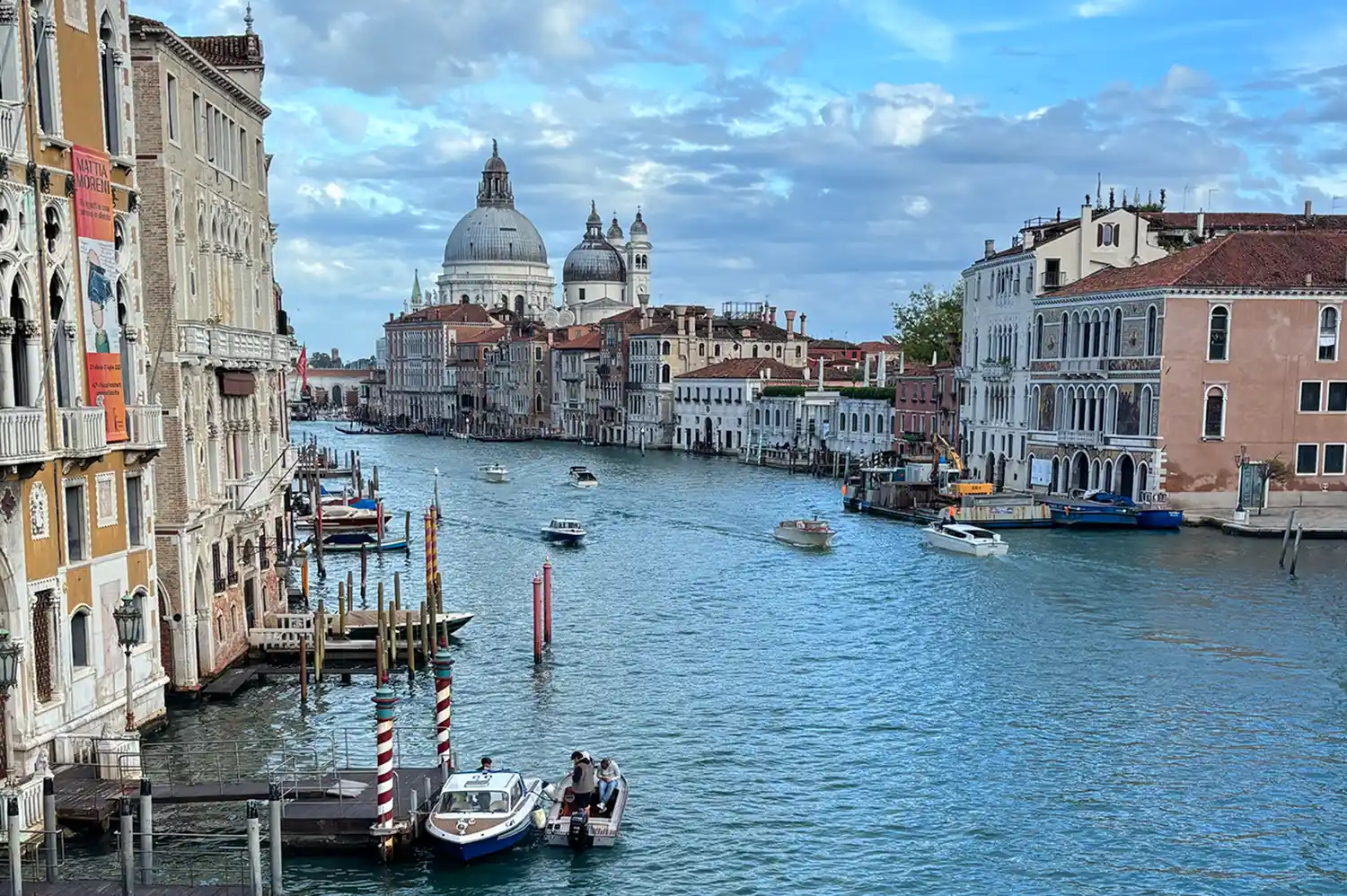
To avoid the crushing weight of tourism in San Marco, we stayed in the Dorsoduro district. For an authentic and quiet experience in Venice, Dorsoduro is peerless. It is the university quarter, filled with art students, local workshops, and a relaxed atmosphere that encourages aimless wandering.
A Local Dining Guide: The Cicchetti Tradition
Our first evening in Venice was spent following the "Venice Dorsoduro local dining guide" etched into the memories of locals. We found ourselves at Osteria Ai Pugni, a small, wood-paneled gem near the Ponte dei Pugni.
Here, the tradition of cicchetti—Venetian tapas—is the heart of the evening. We stood at a high timbered table, sipping ombrina (small glasses of local wine) and sampling:
- Baccalà Mantecato: Creamy whipped cod on crusty polenta.
- Sarde in Saor: Sweet and sour sardines with pine nuts and raisins.
- Polpette: Spicy meat or tuna balls that are gone in two bites.
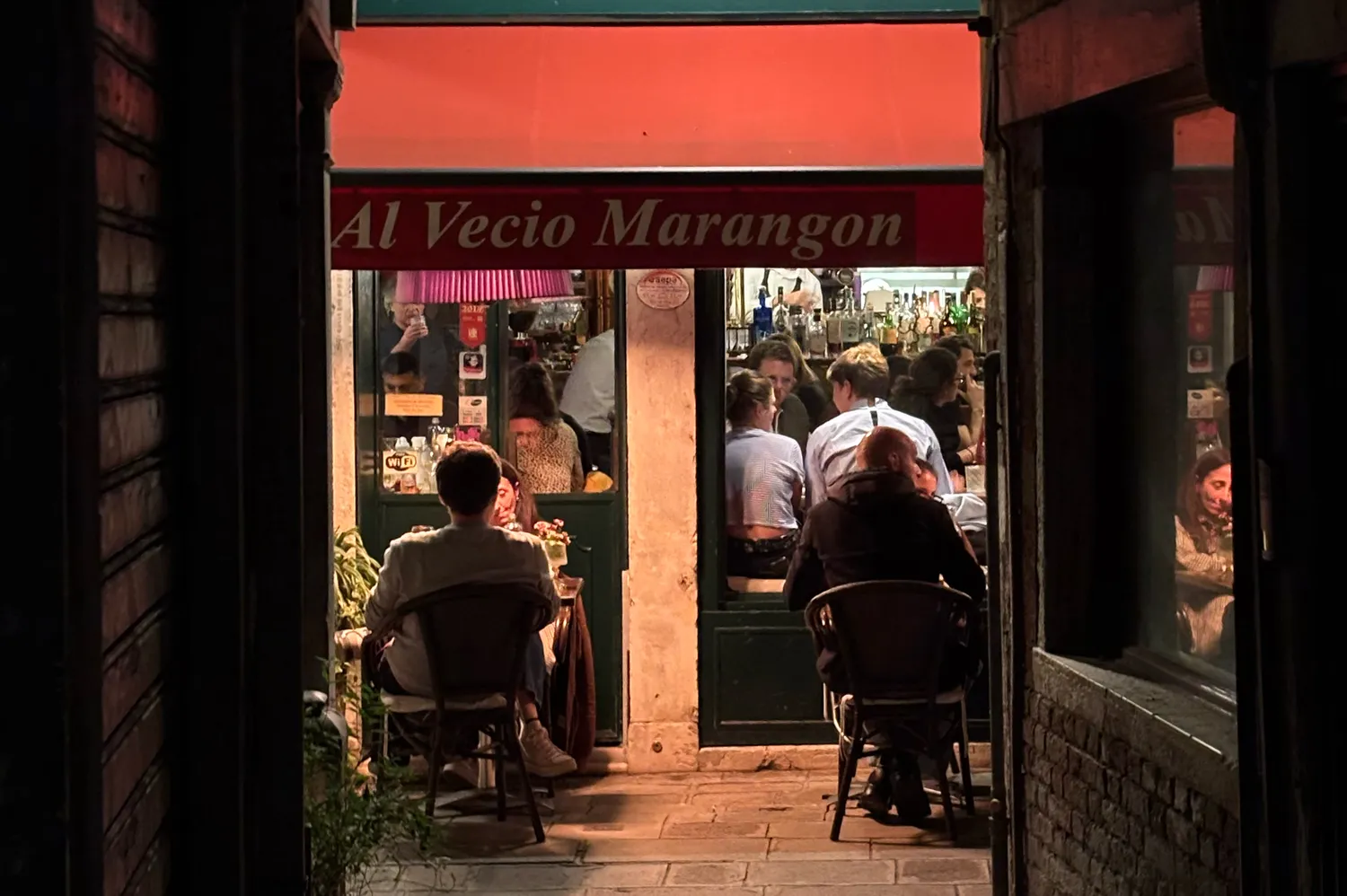
Eating in Dorsoduro feels like being invited into a private home. There are no menus with pictures, no hawkers outside. Just the sound of the canal lapping against the stone and the low hum of Venetian dialect.
Reflecting on the Tracks
As we sat by the Zattere, watching the giant ships silhouette against the Giudecca Canal, the significance of the journey settled in. Traveling with an adult child is a delicate dance of giving space and seeking connection. The train provided the perfect vessel for this—a place where the logistics were handled, the comfort was assured, and we were free to simply be.
One season of his life was giving way to another. And while the high-speed rail had brought us across the country in hours, the emotional distance we had traveled was far greater.
Practical Advice for the Journey
- Balance Fluidity with Luxury: Book your high-speed legs in advance to secure the Club Executive discounts, but leave your afternoons in Venice unplanned.
- Luggage Logistics: Use the luggage racks at the end of the Italo carriages. If you have heavy bags, Venice's bridges are less daunting if you take a Vaporetto (water bus) rather than walking.
- The "Secret" Lounge: If you have a long layover in Florence SMN, the Italo lounge is located near the taxi stand, offering a much-needed air-conditioned sanctuary.
FAQ
Q: Is it better to take a flight or the train from Naples to Venice? A: The train is significantly better. When you account for airport transfers and security, the 5-hour train journey is comparable in time, much more scenic, and drops you directly in the heart of Venice (Santa Lucia), whereas the airport requires an expensive water taxi or bus.
Q: How far in advance should I book Italo tickets for the best price? A: To secure the €65 Club Executive rates, aim to book at least 3 to 4 weeks in advance. Prices rise significantly as the departure date approaches.
Q: Is Venice Dorsoduro safe to walk at night? A: Yes, Dorsoduro is one of the safest and most residential areas of Venice. Even late at night, the streets are frequented by locals and students, and the atmosphere is generally very respectful and calm.