Quick Facts
- Most Disruptive Airport: Newark Liberty International (EWR) leads the nation with a 29.1% disruption rate.
- National Context: Approximately 248 million U.S. passengers faced delays or cancellations in 2025.
- Staffing Shortages: Newark is operating with a 37% deficit in air traffic control staffing, currently employing only 24 certified controllers against a target of 38.
- Most Reliable Hub: Daniel K. Inouye International Airport (HNL) in Honolulu remains the gold standard with only a 16.3% disruption rate.
- Compensation Eligibility: An estimated 21 million passengers qualify for compensation of up to $650 per person under updated consumer protection regulations.
Air travel in 2025 has reached a paradoxical crossroads. While flight volume has returned to—and in many corridors, exceeded—pre-pandemic levels, the infrastructure supporting this growth is fracturing under the pressure. The release of the AirHelp 2025 Disruption Report provides a sobering quantitative look at this reality. For those frequenting the Northeast corridor, the findings confirm what many have long suspected: Newark Liberty International Airport (EWR) is currently the most challenging transit point in the United States. With nearly one in three passengers experiencing a significant schedule change, the "Newark experience" has become a litmus test for traveler patience.
The 2025 AirHelp Disruption Report: An Overview
The latest data from AirHelp paints a picture of a national aviation system operating at its absolute limit. Of the hundreds of millions of travelers who took to the skies this year, 248 million encountered disruptions. These aren't merely five-minute "creeping delays"; they represent significant interruptions that ripple through the global travel network, affecting connections, business meetings, and long-awaited vacations.
At the epicenter of this turbulence is Newark Liberty International (EWR). Recording a 29.1% disruption rate, Newark has eclipsed its perennial rivals in the New York metropolitan area to take the top spot on the "Hall of Shame." This figure is particularly striking when compared to the country’s most reliable hubs. For instance, Daniel K. Inouye International Airport (HNL) in Honolulu reported a disruption rate of just 16.3%, benefiting from more predictable weather patterns and a more stable staffing environment.
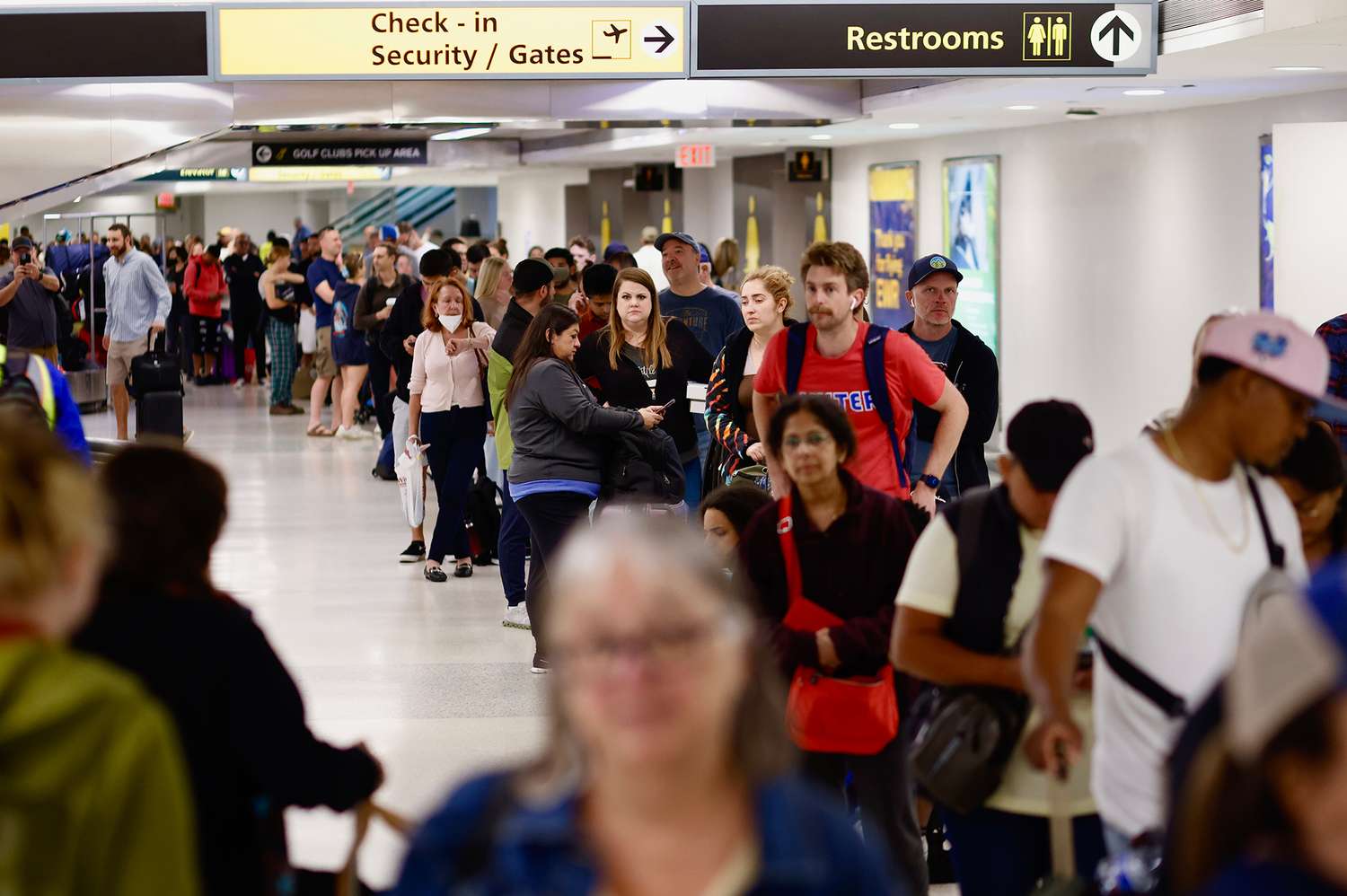
The 2025 report highlights a widening gap between airports that have successfully modernized their operations and those struggling with legacy infrastructure and chronic labor shortages. As we analyze these rankings, it becomes clear that "most delayed" is not just a title—it is a data-driven warning to consumers.
The 'Hall of Shame': Top 10 Most Disrupted U.S. Airports
Newark does not stand alone in its struggle. The 2025 rankings reveal a concentrated problem within the "Big Three" New York airports and major Midwestern hubs. The following table illustrates the top ten airports where passengers are most likely to face Newark Airport flight disruptions in 2025:
| Rank | Airport | Disruption Rate | Primary Factor |
|---|---|---|---|
| 1 | Newark Liberty International (EWR) | 29.1% | ATC Staffing & Infrastructure |
| 2 | Chicago O’Hare International (ORD) | 29.0% | Volume & Concourse Congestion |
| 3 | LaGuardia Airport (LGA) | 29.0% | Airspace Density |
| 4 | John F. Kennedy International (JFK) | 28.5% | International Gate Delays |
| 5 | Dallas/Fort Worth International (DFW) | 27.8% | Severe Weather Patterns |
| 6 | Denver International (DEN) | 27.2% | Rapid Growth & De-icing |
| 7 | Orlando International (MCO) | 26.9% | Leisure Traffic Surges |
| 8 | Fort Lauderdale-Hollywood (FLL) | 26.1% | Regional ATC Bottlenecks |
| 9 | Philadelphia International (PHL) | 25.8% | Runway Configuration |
| 10 | Harry Reid International (LAS) | 25.4% | Extreme Heat Impacts |
The "NYC Hub" problem is evident here. With EWR, LGA, and JFK all occupying the top four spots, the tri-state airspace remains the most congested in the world. Interestingly, high passenger volume does not always correlate with high disruption. Airports like Atlanta (ATL) and Los Angeles (LAX) manage significantly more traffic than Newark but maintain higher on-time performance metrics due to better runway layouts and more resilient staffing models.
Why Newark? Anatomy of a Delay
To understand why Newark is the most delayed US airport in 2025, we must look beyond the weather. While the East Coast is prone to summer thunderstorms and winter blizzards, Newark's failures are largely structural and systemic.
1. The Critical Staffing Deficit
The most alarming statistic in the AirHelp 2025 Disruption Report is the state of Newark’s Air Traffic Control (ATC). The airport is currently operating with a 37% deficit in certified controllers. To operate optimally, the FAA targets a minimum of 38 certified professional controllers at the Newark tower; currently, only 24 are on staff. This shortage forces the FAA to implement "ground delay programs" even on clear-blue-sky days, simply because there aren't enough eyes on the radar to safely manage the full volume of scheduled flights.
2. Aging Telecommunications Infrastructure
While the rest of the world has moved to fiber optics, large segments of Newark's ground infrastructure have historically relied on antiquated copper-wire technology. In 2025, the transition to modern fiber-optic systems has caused its own set of problems. Equipment failures during this "copper-to-fiber" transition have led to multiple communication outages this year, forcing pilots to rely on backup protocols that significantly slow down arrival and departure rates.
3. Construction and FAA Restrictions
Newark is in the midst of a multi-year, $3.5 billion AirTrain project and essential runway maintenance. To manage the chaos, the FAA has maintained strict hourly caps, limiting the airport to just 28 departures and 28 arrivals per hour. When one airline pushes a flight just five minutes behind schedule, it creates a "stacking" effect that can delay flights six hours later.
"The reality at Newark is that the margin for error has vanished. When you combine a 37% controller shortage with legacy hardware, any minor issue—a flat tire on a taxiway or a localized Wi-Fi glitch—cascades into a terminal-wide meltdown." — Aviation Analyst Perspective
Passenger Rights: Are You Owed Money?
With 248 million disrupted passengers nationwide, the financial implications are staggering. One of the most critical takeaways from the 2025 report is that many travelers are leaving money on the table.
The $650 Rule Under current passenger rights regulations (including international standards that apply to many flights leaving or entering the U.S.), passengers can be eligible for up to $650 in compensation for delays exceeding three hours that are within the airline's control. AirHelp estimates that of the disrupted passengers this year, roughly 21 million are eligible for these payouts.
Furthermore, the Department of Transportation (DOT) has implemented new rules in 2025 requiring automatic cash refunds if a flight is canceled or significantly delayed and the passenger chooses not to travel. You no longer have to beg for a voucher; if the airline fails to deliver the service as scheduled, the refund is legally required to be processed to your original form of payment.
EWR Flight Cancellation Reasons and Your Rights:
- Eligible for Compensation: Mechanical issues, airline staffing shortages, late crew arrivals, and IT failures.
- Ineligible for Compensation: Extraordinary circumstances such as severe weather, ATC-mandated ground stops, and security threats.
Survival Guide: Navigating EWR and Other High-Risk Hubs
If you must fly through Newark or any of the top 10 most disrupted airports, you need a tactical approach. Relying on "luck" is no longer a viable travel strategy.
- The "First Out" Rule: Statistics consistently show that flights departing before 8:00 AM have a 20% higher on-time rate than those departing after 4:00 PM. Delays are cumulative; start your day before the backlog begins.
- The Waiver Hack: If you see a "travel advisory" or weather waiver issued by carriers like United (which dominates Newark), use it immediately. These waivers often allow you to switch your flight to JFK or LGA for free. While those airports also rank high for disruptions, having options is better than being stuck in a single-hub meltdown.
- Monitoring Tools: Download Flighty or FlightAware. Often, these apps will notify you of a mechanical delay or an incoming aircraft's location 30 to 60 minutes before the gate agent makes an announcement.
- Buffer Days: For international connections or high-stakes events (weddings, cruises), never fly the day of. In 2025, a 29.1% disruption rate means a one-day buffer is a mathematical necessity, not a luxury.
United Airlines CEO Scott Kirby has recently emphasized the need for enhanced pilot training to handle communication outages and the implementation of more "buffer" in their Newark schedules. While these corporate adjustments are welcome, the burden of preparedness still falls on the traveler.
The Gold Standard: Most Reliable U.S. Airports
It isn't all bad news. While Newark struggles, other hubs have become benchmarks for efficiency. If your itinerary allows for a connection, consider routing through these airports, which have shown remarkable resilience in 2025.
- Daniel K. Inouye International (HNL): 16.3% disruption. The leader in reliability.
- Salt Lake City International (SLC): Consistently ranks high due to its modern "New SLC" terminal design and efficient snow-clearing operations.
- Los Angeles International (LAX): Despite its massive volume, LAX's multi-terminal layout and favorable weather keep it significantly more stable than its East Coast counterparts.
These hubs succeed because they have balanced their growth with infrastructure investment. Salt Lake City, in particular, serves as a blueprint for how a mid-sized hub can expand without sacrificing the passenger experience.
FAQ
Q: Why is Newark consistently worse than JFK or LaGuardia? A: While all three share the same congested airspace, Newark suffers from a more acute Air Traffic Control staffing shortage and is undergoing more disruptive ground-side construction (the AirTrain and Terminal A expansions) simultaneously.
Q: Am I entitled to a hotel if I’m stranded at EWR? A: Yes, if the delay is within the airline's control (mechanical or airline staffing). Most major U.S. airlines have now committed to providing meals and hotel accommodations for overnight delays. Always check the DOT's "Aviation Consumer Protection" dashboard for your specific airline's commitment.
Q: How do I claim the $650 compensation mentioned in the report? A: You can file directly through the airline’s "Claims" or "Customer Relations" portal. If they deny the claim citing "weather" when you suspect it was a "mechanical" issue, third-party services like AirHelp can audit the flight data and litigate on your behalf for a fee.
Conclusion
The 2025 AirHelp Disruption Report serves as a stark reminder that the "golden age" of cheap, reliable air travel is being challenged by aging infrastructure and labor realities. Newark Liberty International’s 29.1% disruption rate is a signal to every traveler: the system is at its limit.
As we head into the busy Christmas and winter holiday season, the data suggests that the "Newark problem" will likely persist through the end of the year and into 2026. By understanding the causes—from the 37% ATC staffing deficit to the copper-to-fiber transition—and knowing your rights to compensation, you can navigate this landscape with more than just hope. You can navigate it with a plan. Aim for the early flights, keep your compensation apps ready, and when possible, look toward the reliability of hubs like Honolulu or Salt Lake City. Safe travels.