Quick Facts
- Duration: 7 Days (Paro, Thimphu, and Punakha)
- Best Time to Visit: March to May (Spring) or September to November (Autumn)
- Signature Experience: The steep pilgrimage to Tiger’s Nest (10,240 feet)
- Travel Style: Mindful Luxury / Slow Travel
- Currency: Bhutanese Ngultrum (BTN), though USD is widely accepted in luxury hotels
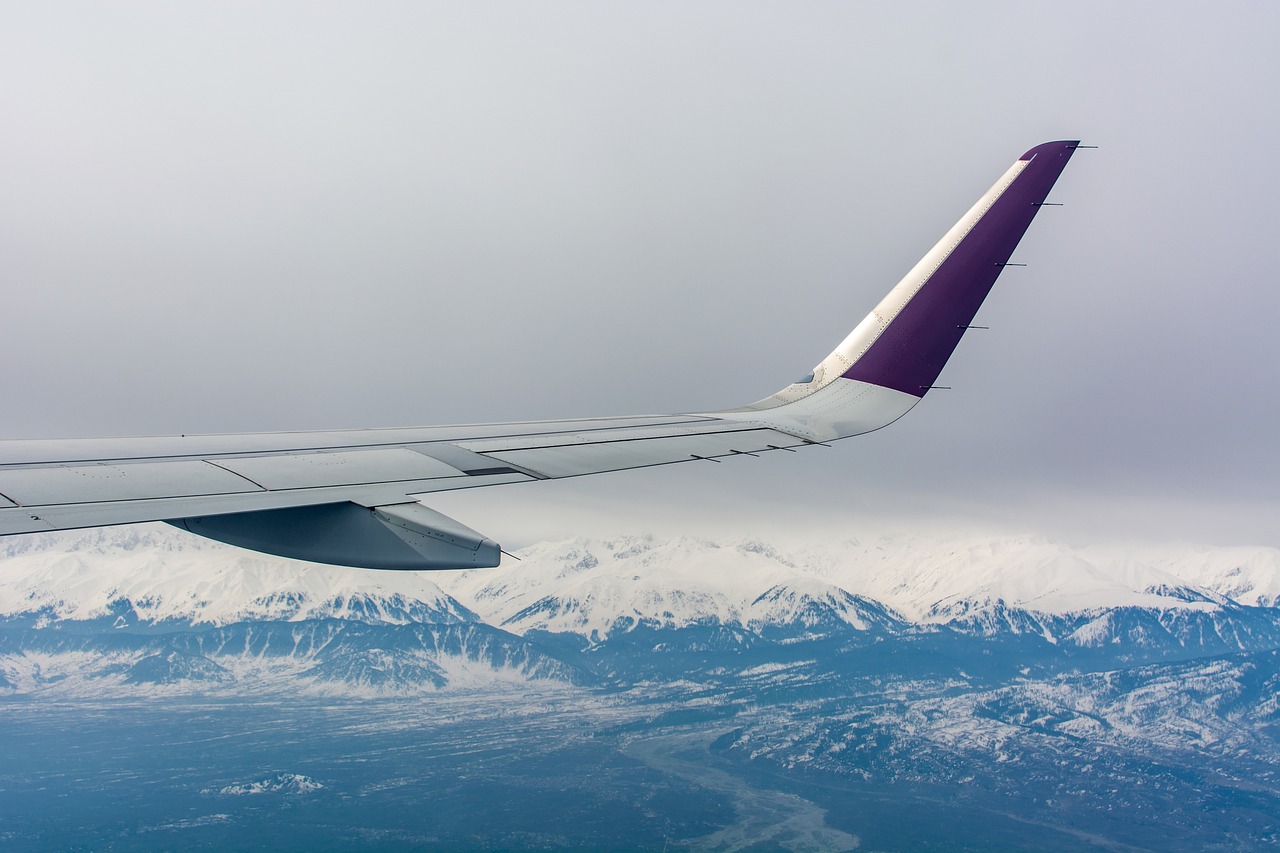
I’ve spent the better part of twenty-five years chasing the neon pulse of Tokyo and the vertical ambition of Dubai. My passport is a cluttered testament to "whirlwind travel"—a frantic collection of 48-hour city breaks and red-eye connections. But as our Druk Air flight banked sharply toward the emerald valley of Paro, the jagged, white-capped silhouettes of Everest and Lhotse forced a sudden, necessary freeze.
For our silver wedding anniversary, we decided to trade the frenetic for the focused. Travel, we realized, gives a relationship a chance for a profound reboot—two partners united in the beautiful strangeness of a new world. In Bhutan, that world is governed not by GDP, but by Gross National Happiness (GNH), a philosophy that prioritizes spiritual well-being over material gain. It is the ultimate setting for couples looking to reconnect, not just with each other, but with a slower, more intentional version of themselves.
Why is Bhutan the ultimate choice for an anniversary? Bhutan offers a unique blend of spiritual stillness, a focus on Gross National Happiness, and world-class luxury lodges like Amankora. This combination provides couples with a profound setting for reflection and relationship "reboots," far removed from the distractions of the modern world.
Preparing for the Kingdom: Logistics of a High-Value Journey
Entering Bhutan is not like crossing any other border. It is a deliberate choice, an investment in exclusivity. The Kingdom famously employs a "High Value, Low Volume" tourism policy. This includes a Sustainable Development Fee (SDF) of $100 per adult, per night—a contribution that funds free education, healthcare, and conservation within the country. While some view this as a hurdle, for the anniversary traveler, it acts as a filter, ensuring the trails are never crowded and the silence remains undisturbed.
The journey begins before you even touch the ground. The flight into Paro is legendary, as pilots navigate a narrow valley with surgical precision. If you sit on the left side of the plane when flying from Delhi or Bangkok, you are treated to a front-row seat to the roof of the world.
Unlike most destinations where you might "go it alone," a private guide and driver are essential in Bhutan. They are more than just logistics managers; they are cultural translators. Our guide became our "Chief Experience Officer," explaining the nuance of the prayer flags and the symbolism of the phallus paintings on farmhouse walls, allowing us to simply be.
Days 1-2: Thimphu — The Only Capital Without a Traffic Light
Thimphu is perhaps the world's most relaxed capital. There are no traffic lights; instead, a white-gloved policeman directs the occasional flow of cars with the grace of a ballet dancer. Upon arrival, we walked across an ancient iron-chain bridge, the wind whipping through the colorful prayer flags, signaling our transition from the outside world into the "Land of the Thunder Dragon."
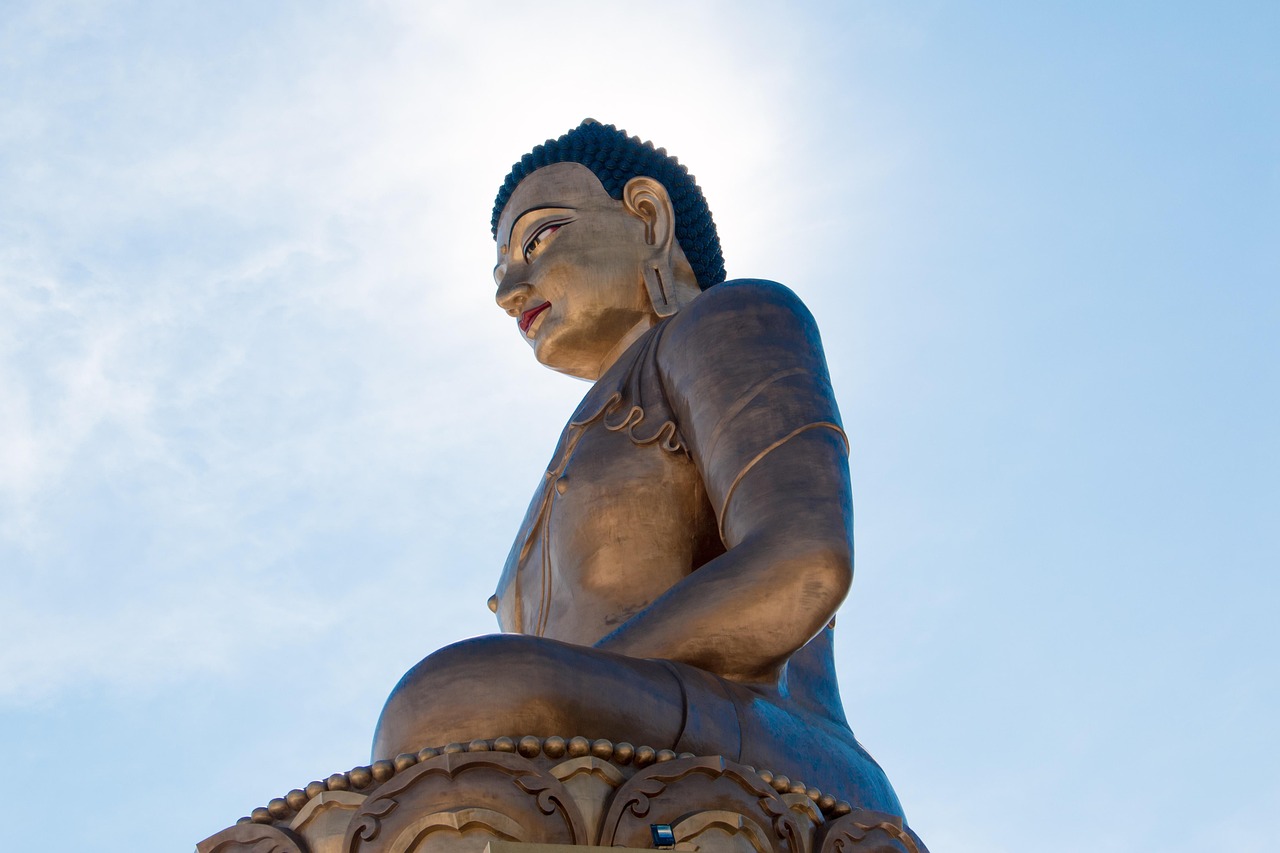
Our first major stop was the Buddha Dordenma. This 169-foot-tall bronze statue is one of the largest sitting Buddhas in the world, overlooking the valley like a gilded sentinel. Inside, there are 125,000 smaller Buddhas, creating an atmosphere of overwhelming peace.
For a truly personal anniversary touch, we visited the Pangri Zampa Monastery, Bhutan's center for astrology. There, we had our "relationship reading" by a resident monk. Whether or not you believe in the alignment of stars, hearing a monk describe the spiritual compatibility of your 25-year union in a room scented with juniper incense is a memory that sticks.
Where to Stay: For those seeking minimalist elegance, Amankora Thimphu is a sanctuary. Designed like a traditional dzong (fortress) but with clean, modern lines, it sits nestled in the blue pine forests of the Motithang area. It doesn't just offer a room; it offers a rhythm of life that matches the surrounding trees.
Days 3-4: Punakha — Valleys, Rivers, and Rituals
The drive to Punakha takes you over the Dochula Pass. On a clear day, the entire Himalayan range reveals itself. The pass is home to exactly 108 memorial stupas (Chortens), built to honor Bhutanese soldiers. These 108 structures serve as a symbol of spiritual protection for all travelers who pass through. We spent an hour here, walking clockwise around the stupas, the only sound being the distant chime of ritual bells.
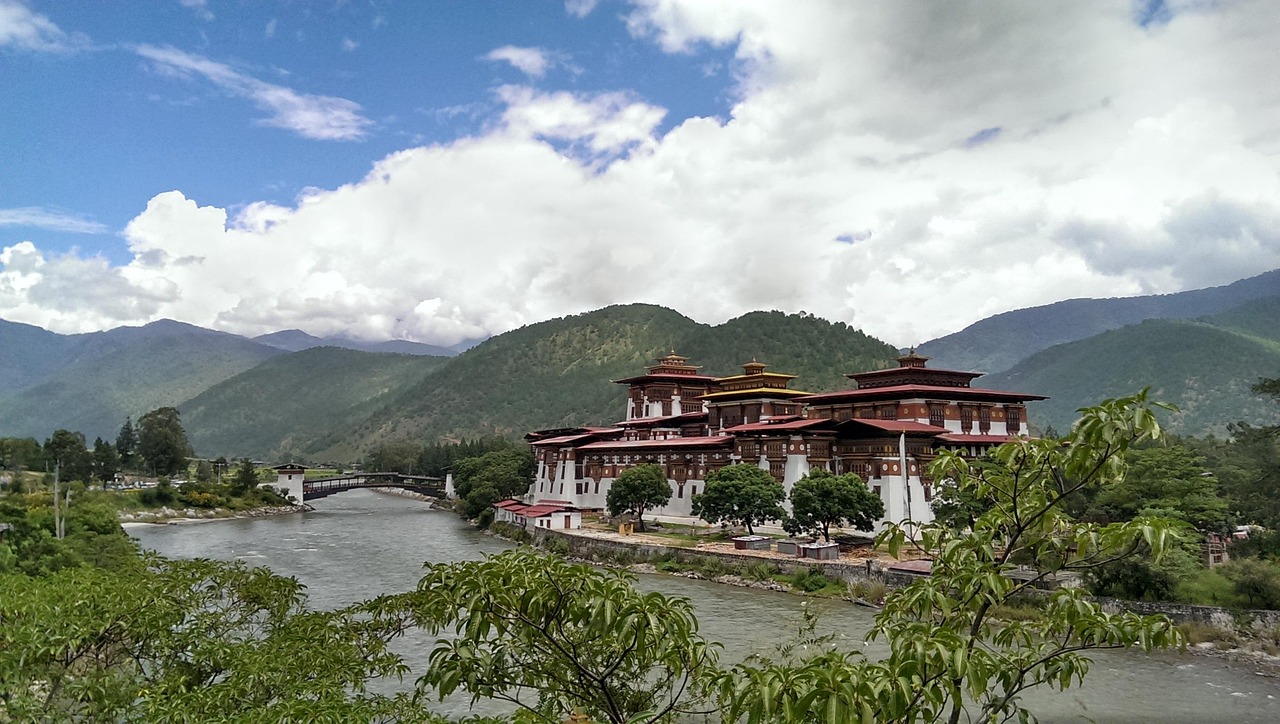
Descending into the Punakha valley, the climate shifts from alpine chill to subtropical warmth. Punakha Dzong, often called the "Palace of Great Happiness," is arguably the most beautiful building in the country. It sits at the confluence of two rivers—the Pho Chhu (father) and Mo Chhu (mother)—their waters meeting beneath the towering white walls of the fortress.
We swapped the luxury of the lodge for an afternoon at a local farmhouse. Here, we learned that Bhutanese cuisine is not just food; it’s an endurance test of spice. We sat on floor cushions and ate ema datshi—a fiery mix of chilies and local cheese—with our hands. It was authentic, sweaty, and incredibly bonding.
Days 5-6: Paro — The Pilgrimage to Stillness
The penultimate chapter of any Bhutanese journey is the ascent to Paro Taktsang, or Tiger’s Nest. This monastery doesn't just sit on a cliff; it clings to it like a benediction, suspended 3,000 feet above the valley floor.
How difficult is the Tiger's Nest hike? The hike involves a steep ascent to an altitude of approximately 10,240 feet. It is a physically demanding 4-5 hour round-trip journey. While challenging, the path is well-maintained, and the spiritual atmosphere of the pine forests makes it a rewarding climb for most travelers of average fitness.
The hike is a metaphor for a long-term relationship: it requires pacing, mutual encouragement, and the occasional pause to catch your breath. Navigating paths that feel like they are floating in the clouds, we reached the monastery's entrance, where the roar of a waterfall competes with the chanting of monks.

After the descent, there is only one way to recover: a traditional Bhutanese hot stone bath. Large river stones are heated over an open fire until they are glowing red, then dropped into a wooden tub filled with water and medicinal artemisia (wormwood) leaves. The stones crack and hiss, releasing minerals and a deep, penetrating heat that dissolves every ache from the mountain climb.
Where to Stay: Amankora Paro is situated in a lime-washed forest, overlooking the ruins of the 17th-century Drukgyel Dzong. After our bath, we sat by the outdoor firepit, wrapped in wool blankets, watching the stars emerge over the peaks. It was the "stillness" we had been searching for.

Day 7: The Soft Goodbye
On our final morning, we participated in the ritual of hanging prayer flags. In Bhutan, these flags are not just decorations; they are prayers for the world. As the wind catches the fabric, the intentions are said to be carried across the globe. We hung ours for the next 25 years of our journey, a small splash of blue, white, red, green, and yellow against the vast Himalayan sky.
What are the top experiences for a slow-travel itinerary in Bhutan?
- The Pilgrimage: Hiking to Tiger's Nest for spiritual reflection.
- The Ritual: Soaking in a traditional artemisia-infused hot stone bath.
- The Connection: Receiving a blessing or an astrology reading at an ancient monastery.
- The Flavor: Sharing an authentic farmhouse meal of ema datshi with a local family.
As we looked back on the week, the "whirlwind" travel of our past felt distant and shallow. Bhutan had taught us that the most profound travel experiences aren't found in the number of sights seen, but in the depth of the stillness shared.
Packing for the Kingdom
| Item | Purpose | Recommendation |
|---|---|---|
| Layers | Temperature Control | Temperatures swing wildly between sun and shade. |
| Sturdy Boots | Hiking | Essential for Tiger's Nest and temple stairs. |
| Formal Scarf | Cultural Respect | Required for entering certain Dzongs and temples. |
| Sunscreen | High Altitude | The sun is much stronger at 10,000+ feet. |
| Light Thermals | Nighttime Comfort | Essential for chilly evenings in Thimphu and Paro. |
FAQ: Planning Your Bhutanese Anniversary
Q: Do we need a visa before we arrive? A: Yes, but it is typically handled by your tour operator or luxury lodge. You must have your visa clearance letter before boarding your flight to Paro.
Q: Is Bhutan suitable for travelers with limited mobility? A: While the Tiger's Nest hike is steep, many other sites like Punakha Dzong and the Buddha Dordenma are accessible. Horses are also available for the first half of the Tiger's Nest ascent.
Q: What is the dress code for temples? A: Modesty is key. Shoulders and knees must be covered. You will also be required to remove your shoes and hats before entering any inner sanctum.
Start Your Mindful Journey
Bhutan is more than a destination; it is a recalibration of the soul. If you are ready to swap the noise of the world for the silence of the mountains, there is no better time to plan your "stillness" journey.