Quick Facts
- Design Heritage: A unique cultural palimpsest where 18th-century "Mineiro Baroque" meets 20th-century Modernism and 21st-century contemporary art.
- Architectural Icons: Home to the Pampulha Modern Ensemble, a UNESCO World Heritage site and the birthplace of Oscar Niemeyer’s signature curves.
- Artistic Scale: Inhotim is one of the world's largest open-air contemporary art centers, featuring over 700 works across 345 acres.
- Creative Resurgence: Belo Horizonte’s Mercado Novo has seen over 100 new design and artisanal businesses open since 2018, revitalizing a 1960s brutalist landmark.
- Best Time to Visit: May to August offers dry weather and mild temperatures, perfect for exploring both colonial hills and outdoor art galleries.
To travel through the Brazilian state of Minas Gerais is to witness a visual dialogue between centuries. It is a place where the heavy, gold-laden altars of the 1700s share the horizon with the weightless, concrete curves of the 1940s. For those who find inspiration in the built environment, this landlocked state—the "General Mines"—is far more than a historical relic; it is a living laboratory of aesthetic evolution.
Why is Minas Gerais a design lover's dream? Minas Gerais is considered a design lover's dream because it seamlessly blends 18th-century Baroque colonial heritage with 20th-century high modernism by Oscar Niemeyer and contemporary global art at the Inhotim museum. This intersection of eras provides a rare opportunity to see how tradition fuels innovation within a single, dramatic landscape.
Belo Horizonte: The Modernist Gateway
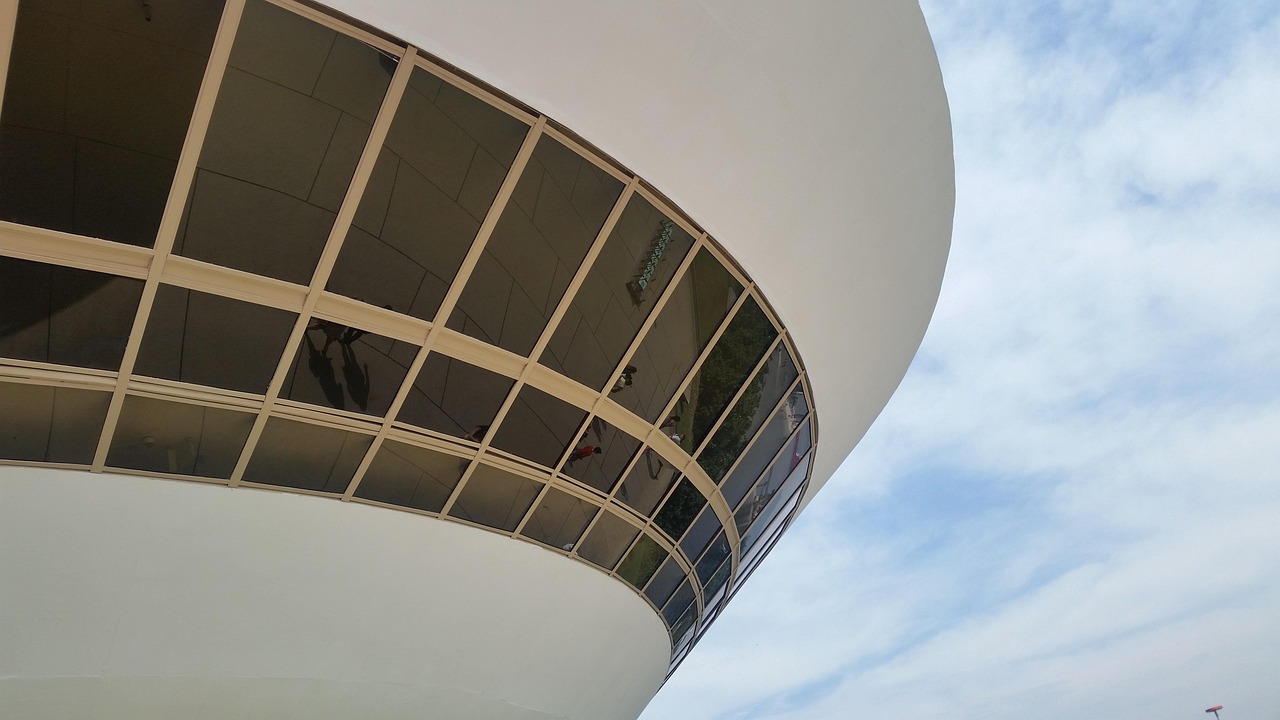
Belo Horizonte, Brazil’s first planned city, was founded in 1897 with a vision of order and progress. Yet, its true design identity didn't solidify until the 1940s, when a young architect named Oscar Niemeyer was commissioned to design a leisure complex around an artificial lake. This project, the Pampulha Modern Ensemble, effectively launched Brazilian Modernism onto the world stage.
The Pampulha Modern Ensemble
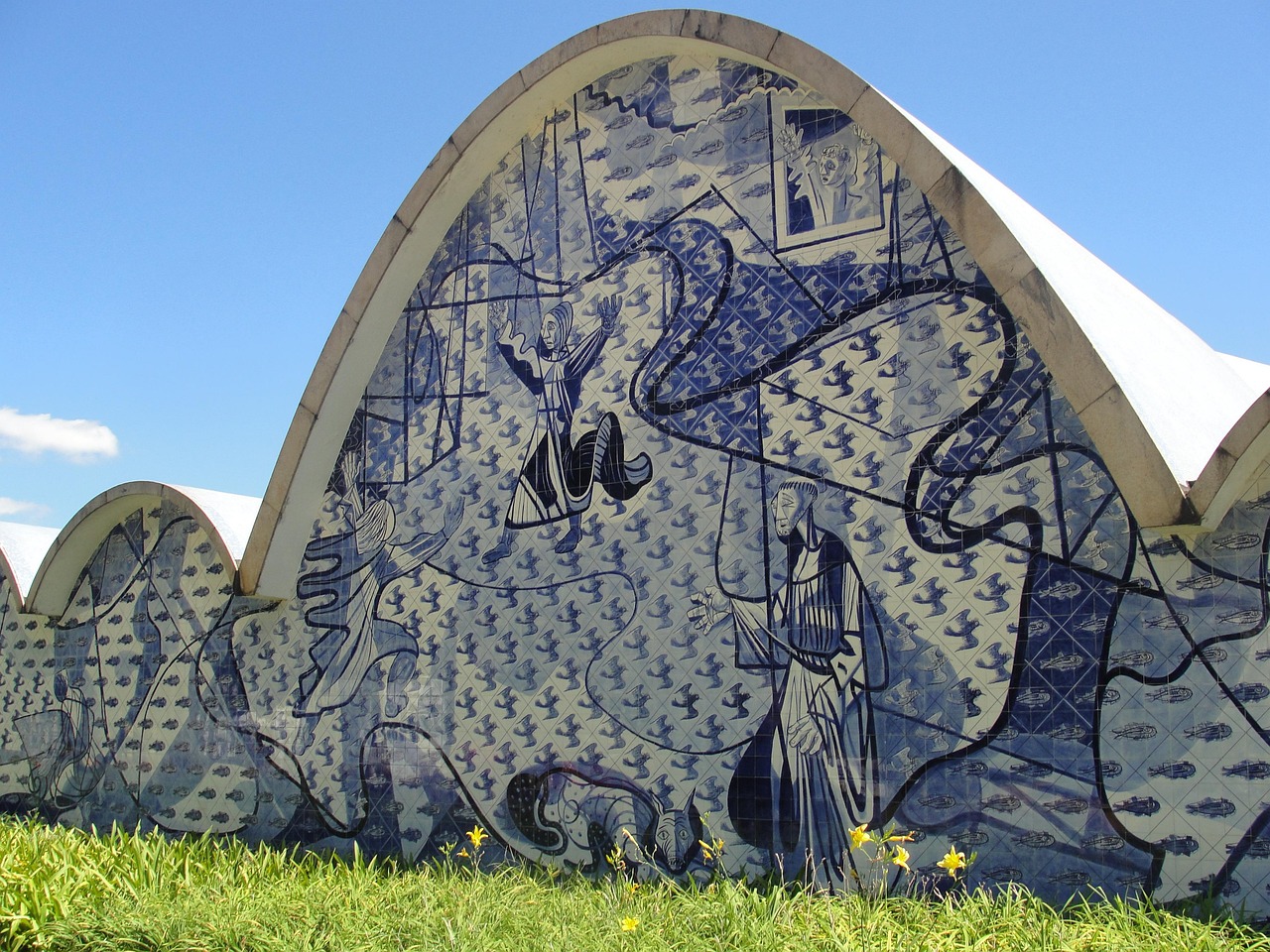
Walking through Pampulha is an exercise in appreciating the "serpentine" line. Niemeyer famously rejected the straight lines of European functionalism, preferring the curves he saw in the mountains of his homeland and the bodies of Brazilian women. The Church of Saint Francis of Assisi is the crown jewel here; its parabolic concrete shells and the vibrant blue azulejos (tiles) by Cândido Portinari broke every ecclesiastical architectural rule of the time. Nearby, the Casa do Baile (Dance Hall) follows the lake's edge with a circularity that feels both utopian and organic.
The Renaissance of Mercado Novo
While Pampulha represents the mid-century peak, the current creative pulse of the city beats within the walls of Mercado Novo. Built in 1962, this brutalist giant sat half-empty for decades until a grassroots movement of designers, chefs, and artists began a revitalization in 2018. Since then, over 100 new businesses have taken root.
Unlike the polished malls of the city's wealthier districts, Mercado Novo celebrates a "made in Minas" ethos. Here, you will find letterpress workshops, craft distilleries, and clothing boutiques that utilize local textiles. The aesthetic is raw and unpretentious—exposed brick, neon signs, and cold beer served in "copo americano" glasses. It is the epicenter of BH's modern creative hub.
Praça da Liberdade
For a condensed history of Brazilian architecture, a stroll through the Praça da Liberdade is essential. The square is a stylistic timeline: the CCBB (Centro Cultural Banco do Brasil) showcases neoclassical grandeur, while the Edifício Niemeyer nearby serves as a sinuous modernist counterpoint. The entire circuit has been converted into a cultural corridor, housing museums that explore everything from the state's mining history to its contemporary fashion.
Inhotim: A Utopian Art Oasis
Located about 90 minutes from Belo Horizonte in the town of Brumadinho, Inhotim is a destination that defies simple categorization. It is part botanical garden, part contemporary art museum, and entirely immersive. Founded by mining tycoon Bernardo Paz, the site has grown into a 345-acre sanctuary where art is not merely hung on walls but integrated into the earth itself.
The statistics of the site are staggering: over 700 artworks by 60+ international artists are scattered across a landscape designed with the help of legendary landscape architect Roberto Burle Marx. But the numbers don't capture the experience of rounding a lush, tropical corner to find a pavilion made entirely of glass or a massive steel sculpture emerging from the red soil.
Must-Visit Pavilions
- Galeria Hélio Oiticica: Here, the Magic Square invites visitors to walk through a labyrinth of primary-colored walls, challenging perceptions of space and light.
- Doug Aitken’s Sonic Pavilion: A glass-and-steel structure that houses a 200-meter-deep well with microphones that transmit the subterranean sounds of the earth in real-time. It is a haunting, visceral experience.
- Galeria Claudia Andujar: Dedicated to the photographer’s life work with the Yanomami people, the building itself—a brutalist-inspired brick structure—mimics the dappled light of the Amazon rainforest.
In-Brief: Planning Your Inhotim Visit
| Category | Detail |
|---|---|
| Entry Fee | Approx. R$ 50,00 (Free on certain Wednesdays; check official site) |
| Internal Transport | R$ 35,00 for hop-on/hop-off electric carts (highly recommended) |
| Best Arrival Time | 9:30 AM (Doors open) |
| Suggested Duration | 2 full days to see all major galleries |
| Where to Stay | The 'Clara Arte' villa complex offers luxury on-site immersion |
The Gold Route: 18th-Century Baroque Treasures
To understand the curves of Niemeyer, one must first look at the curves of the Baroque. In the 1700s, Minas Gerais was the center of the world's gold rush. The wealth extracted from these hills funded some of the most intricate and dramatic architecture in the Southern Hemisphere.
Ouro Preto
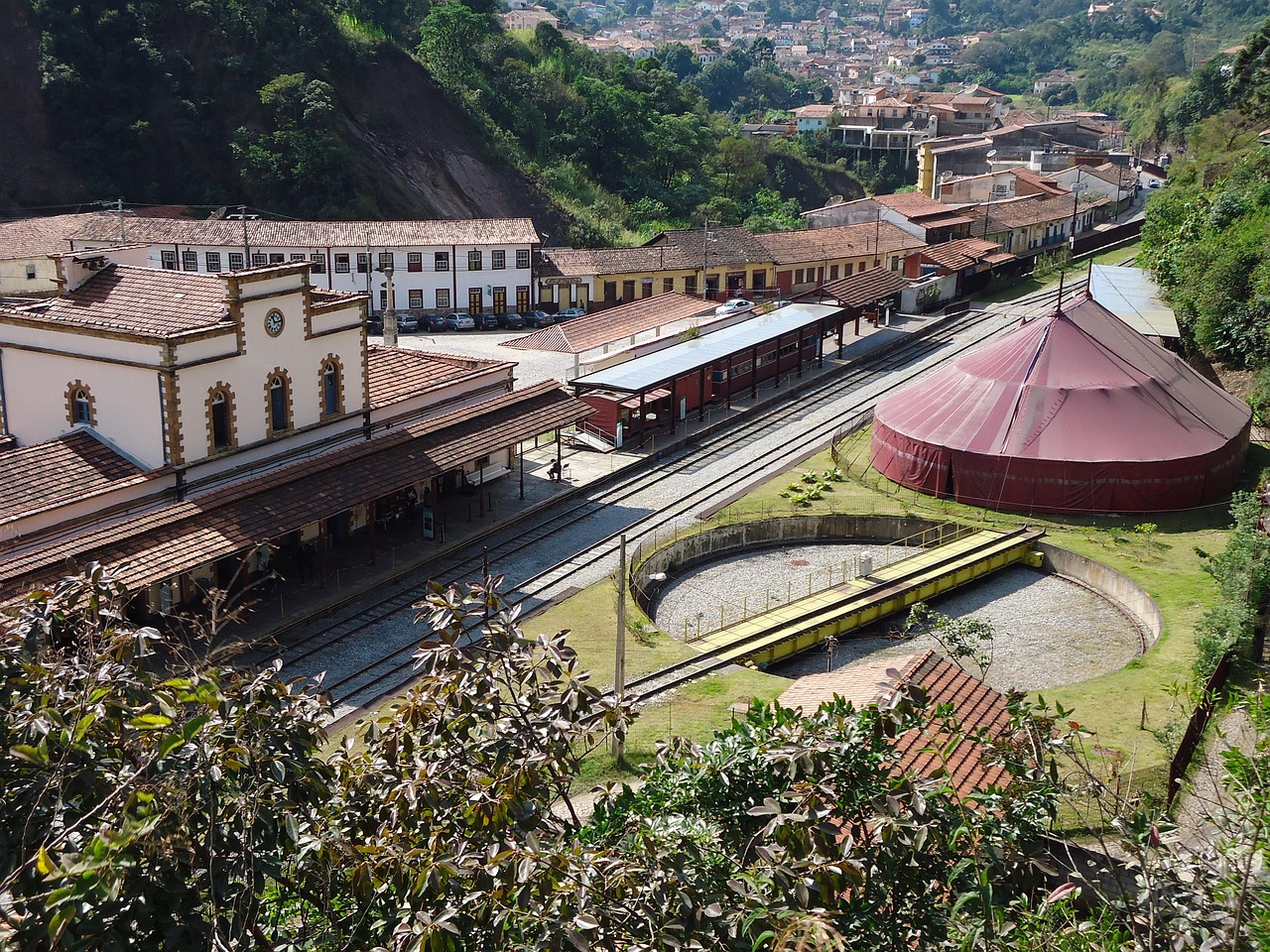
A UNESCO World Heritage site, Ouro Preto is a labyrinth of steep, cobblestone streets and whitewashed houses with colorful window frames. The city is a masterpiece of colonial urbanism. The Church of Saint Francis of Assisi here—designed by the legendary sculptor Aleijadinho—represents the pinnacle of "Mineiro Baroque." Aleijadinho, who suffered from a debilitating disease that forced him to work with tools strapped to his arms, carved soapstone into figures that possess a haunting, lifelike fluidity.
The Ouro Preto skyline at sunset, punctuated by the silhouettes of over a dozen churches, is perhaps the most iconic view in the state. For the design traveler, the city’s antique workshops and jewelry stores (specializing in imperial topaz) offer a tangible link to its opulent past.
Tiradentes and Congonhas
If Ouro Preto is dramatic, Tiradentes is poetic. It is a smaller, more refined colonial town that has become a "culinary goldmine" and a hub for high-end artisanal crafts. The preserved streets are lined with workshops where woodcarvers and blacksmiths continue techniques passed down through generations.
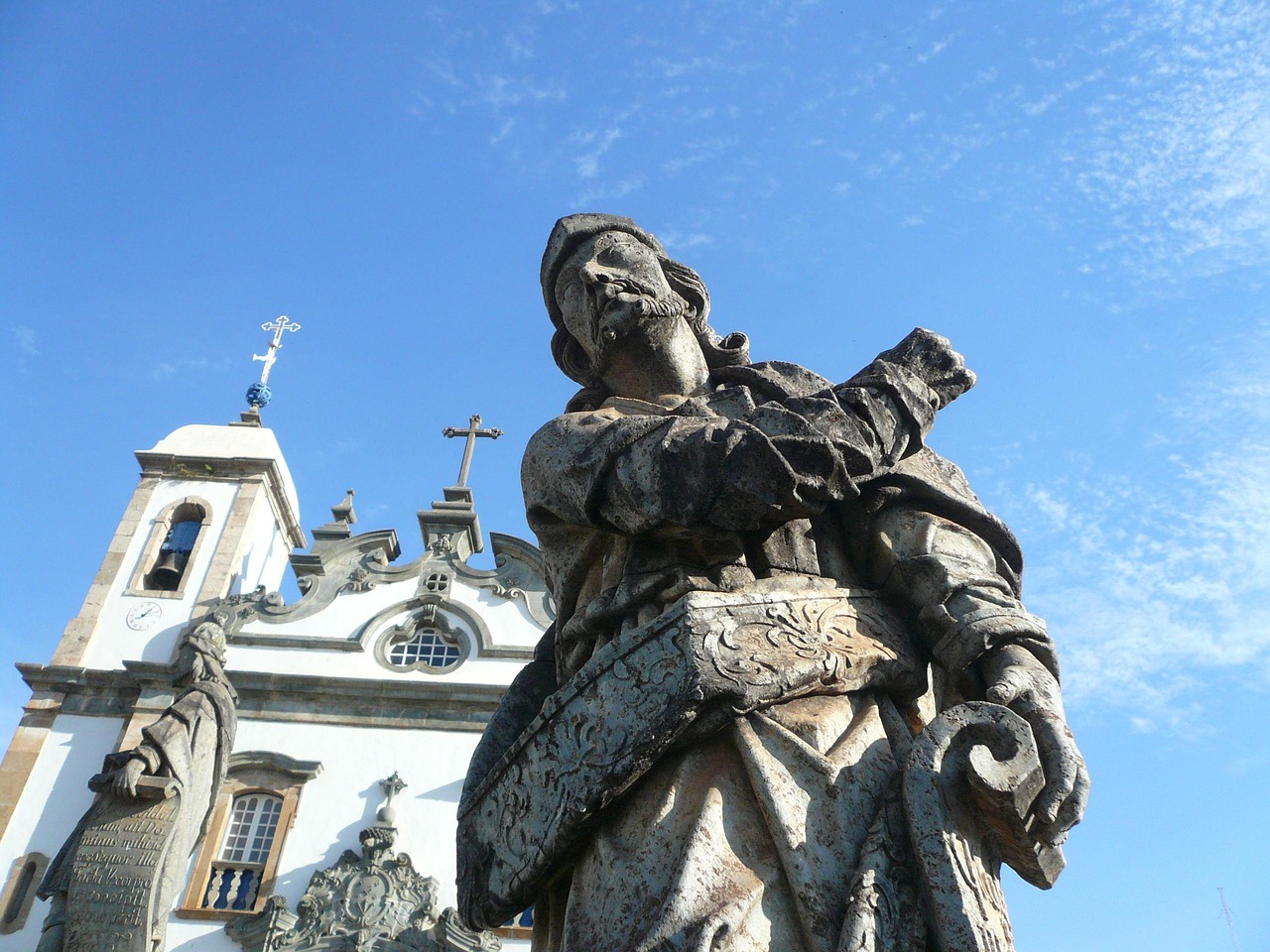
Further along the route lies Congonhas, home to the Sanctuary of Bom Jesus de Matosinhos. Here, Aleijadinho’s masterpiece reaches its emotional peak: the Twelve Prophets. These twelve soapstone sculptures stand on the terrace of the church, overlooking the town with an intensity that has captivated art historians for centuries. They are masterpieces of movement and expression, carved in a style that some have called "the Baroque of the Tropics."
Practicalities for the Design Traveler
The Ideal Season
The best time to visit Minas Gerais is between May and August. During these months, the "veranico" (little summer) provides clear blue skies—perfect for photographing the white colonial walls against the deep ochre soil—and the temperatures are cool enough for the steep hikes required in Ouro Preto.
Gastronomy: The Art of the Table
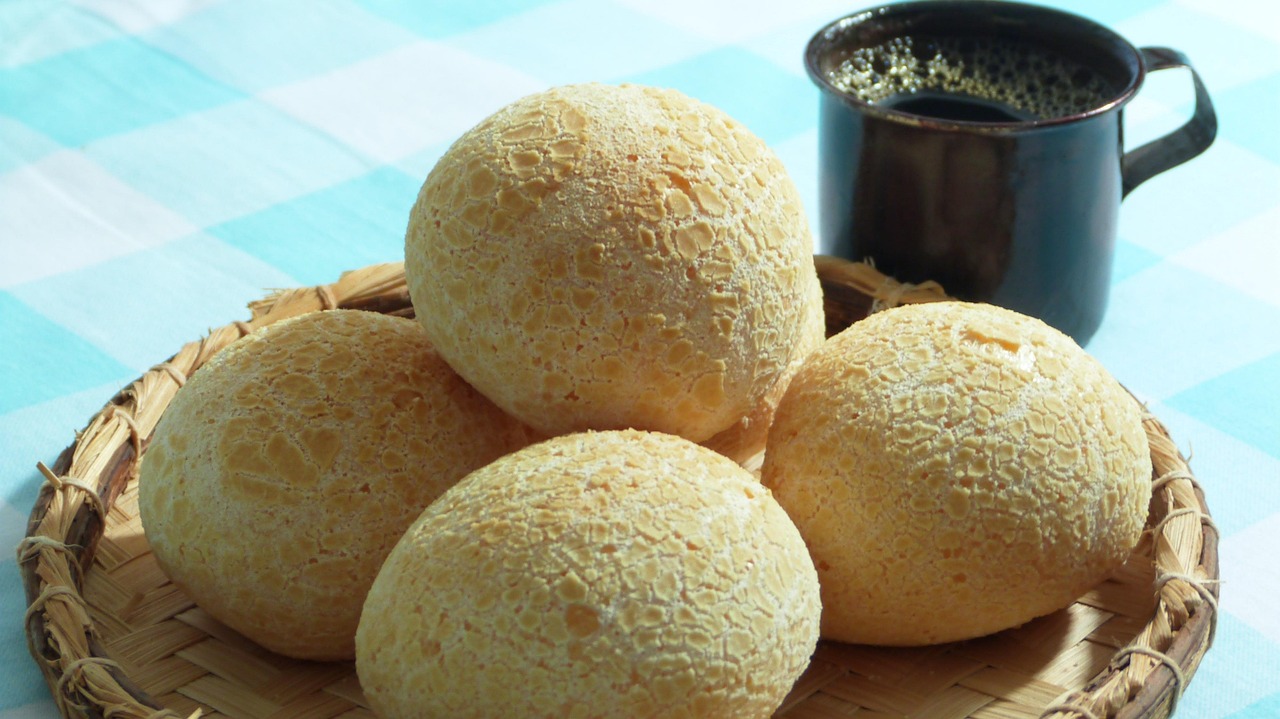
In Minas, design extends to the plate. "Comida Mineira" is the ultimate comfort food, rooted in the farm-to-table traditions of the state’s interior.
- Pão de Queijo: Do not miss the authentic version, made with cured Queijo Minas and fermented cassava flour.
- Mercado Central (BH): A sensory overload where you can sample hundreds of types of cheese, cachaça, and dulce de leche.
- Innovative Dining: In Belo Horizonte, look for restaurants like Glouton or Cozinha Santo Antônio, where traditional ingredients are reinterpreted through contemporary culinary techniques.
Photography and Packing Tips
- Lens Choice: Bring a wide-angle lens for the narrow colonial streets of Ouro Preto and a prime lens for the interior of the churches (though note that many forbid flash).
- Footwear: This is not the place for heels. The "pé de moleque" (cobblestone) streets are notoriously uneven and slippery. High-grip walking shoes are a design traveler’s best friend here.
- Lighting: For Inhotim, the mid-morning light (10:00 AM) is best for the outdoor sculptures, while the late afternoon sun (4:00 PM) creates long, dramatic shadows against the brutalist architecture of the galleries.
FAQ
How do I get between Belo Horizonte, Inhotim, and the colonial towns? While there are buses, renting a car is highly recommended for design travelers. The drive from BH to Inhotim takes 90 minutes, and the "Gold Route" to Ouro Preto takes about 2 hours. Having a car allows you to stop at smaller roadside workshops and viewpoints that buses bypass.
Is Inhotim doable in a single day? While you can see the "greatest hits" in one day, it is exhausting. The site is vast, and many galleries are experiential, requiring time to sit and reflect. Two days allow for a much more civilized pace, permitting you to enjoy the botanical gardens between art viewings.
Is it safe to travel in Minas Gerais? Generally, Minas Gerais is considered one of the safer states in Brazil for tourists. Belo Horizonte requires the usual city precautions (avoiding quiet streets at night, keeping an eye on belongings), but the colonial towns like Tiradentes and Ouro Preto are very relaxed and walkable.
Discover the Soul of Brazilian Design
Minas Gerais is more than a destination; it is an aesthetic journey that challenges the boundary between the historic and the futuristic. Whether you are standing in the shadow of a 200-year-old prophet or inside a sonic pavilion that listens to the earth, you are participating in a design legacy that is uniquely Brazilian.