To visit Rome in 2024 is to dance between two worlds. On one side, there is the neon-lit rush of the Trevi Fountain and the dizzying queues of the Vatican—magnificent, certainly, but often breathless. On the other side lies the "Eternal" Rome I prefer: a city of long shadows, silent cloisters, and the scent of bitter orange drifting through medieval alleys. Finding this version of Rome requires looking beyond the postcard views and stepping off the well-trodden flagstones of the Centro Storico.
For those seeking an authentic Roman journey this year, the path to discovery is subterranean, panoramic, and delightfully quiet. The top hidden gems for your 2024 itinerary include the multi-layered Basilica of San Clemente, the bohemian artisan streets of the Monti district, the serene Aventine Hill, and the sprawling, seaside ruins of Ostia Antica. Whether you are standing before a 2nd-century pagan altar or watching the city ignite in gold from the Janiculum Hill, these spots offer a reprieve from the crowds without sacrificing a drop of Roman grandeur.
Quick Facts for Your 2024 Rome Journey
| Category | Top Recommendation | Why it’s a Gem |
|---|---|---|
| History | Basilica of San Clemente | A 1,100-year vertical timeline of Roman history. |
| Viewpoint | Janiculum Hill | Panoramic views with a daily 12:00 PM cannon fire tradition. |
| Atmosphere | Rione Monti | Rome’s oldest "village" feel with artisan boutiques. |
| Archaeology | Ostia Antica | 60-70% less crowded than the Colosseum; better preserved than Pompeii. |
1. Basilica di San Clemente: The Roman ‘Time Machine’
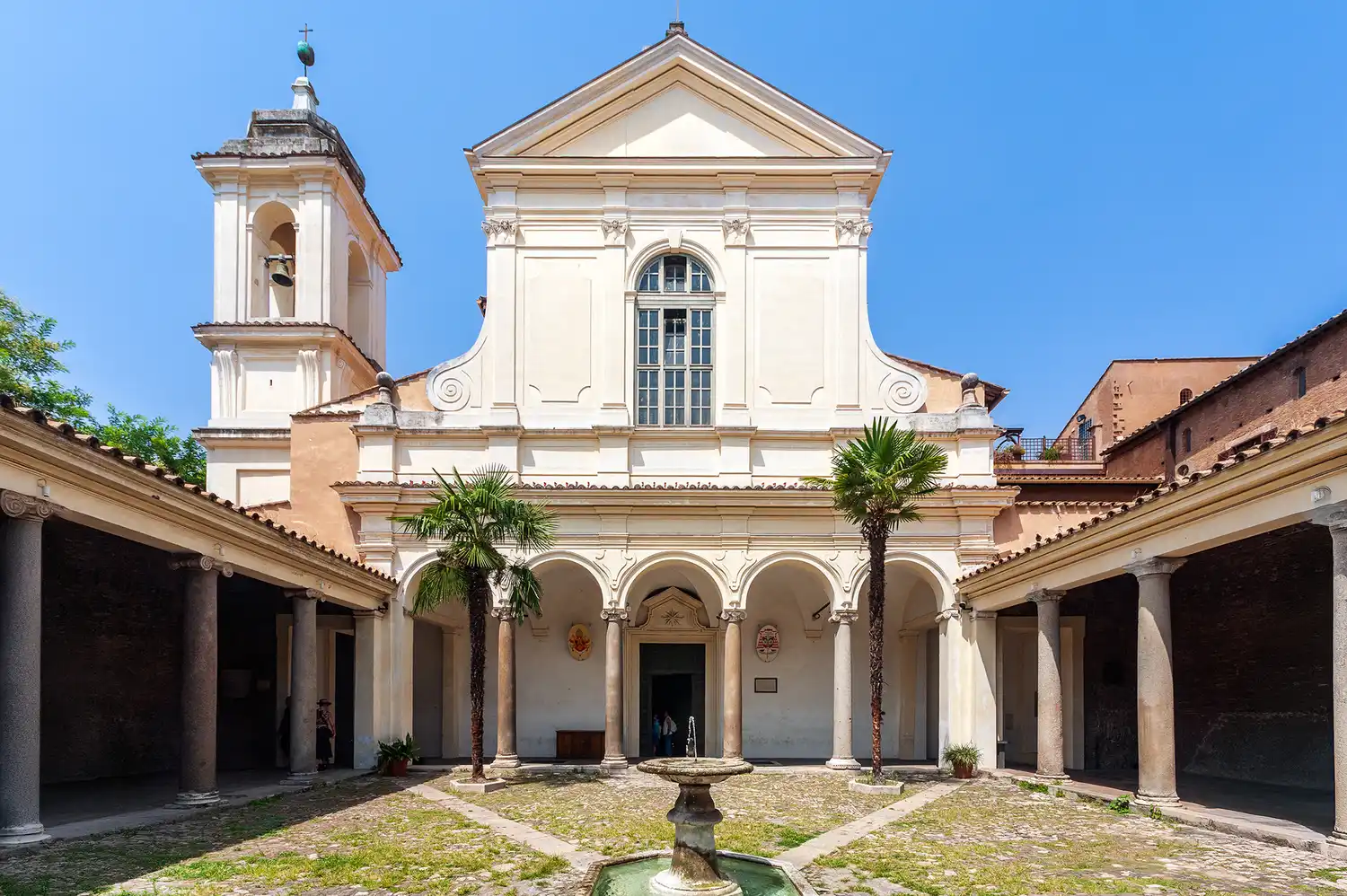
Just a short walk from the Colosseum, the Basilica of San Clemente is perhaps the most profound architectural metaphor for the city itself. It is not merely a church; it is a vertical archive of Western civilization. When you enter the 12th-century upper basilica, you are greeted by shimmering golden mosaics. But the true magic begins when you descend.
The Basilica offers a vertical timeline spanning over 1,100 years across three distinct archaeological levels. Below the medieval church lies a 4th-century basilica, and further down still, the damp, cool air of the 1st century awaits. Here, you will find a Mithraic temple—a sanctuary for a mystery cult—complete with stone altars and the sound of an underground stream that still flows through Roman pipes.
Pro-Tip: Wear a light sweater, even in mid-August. The temperature drops significantly as you descend through the centuries, and the humidity of the underground levels is a stark contrast to the Roman sun.
2. Rione Monti: Rome’s Oldest Village-Within-a-City
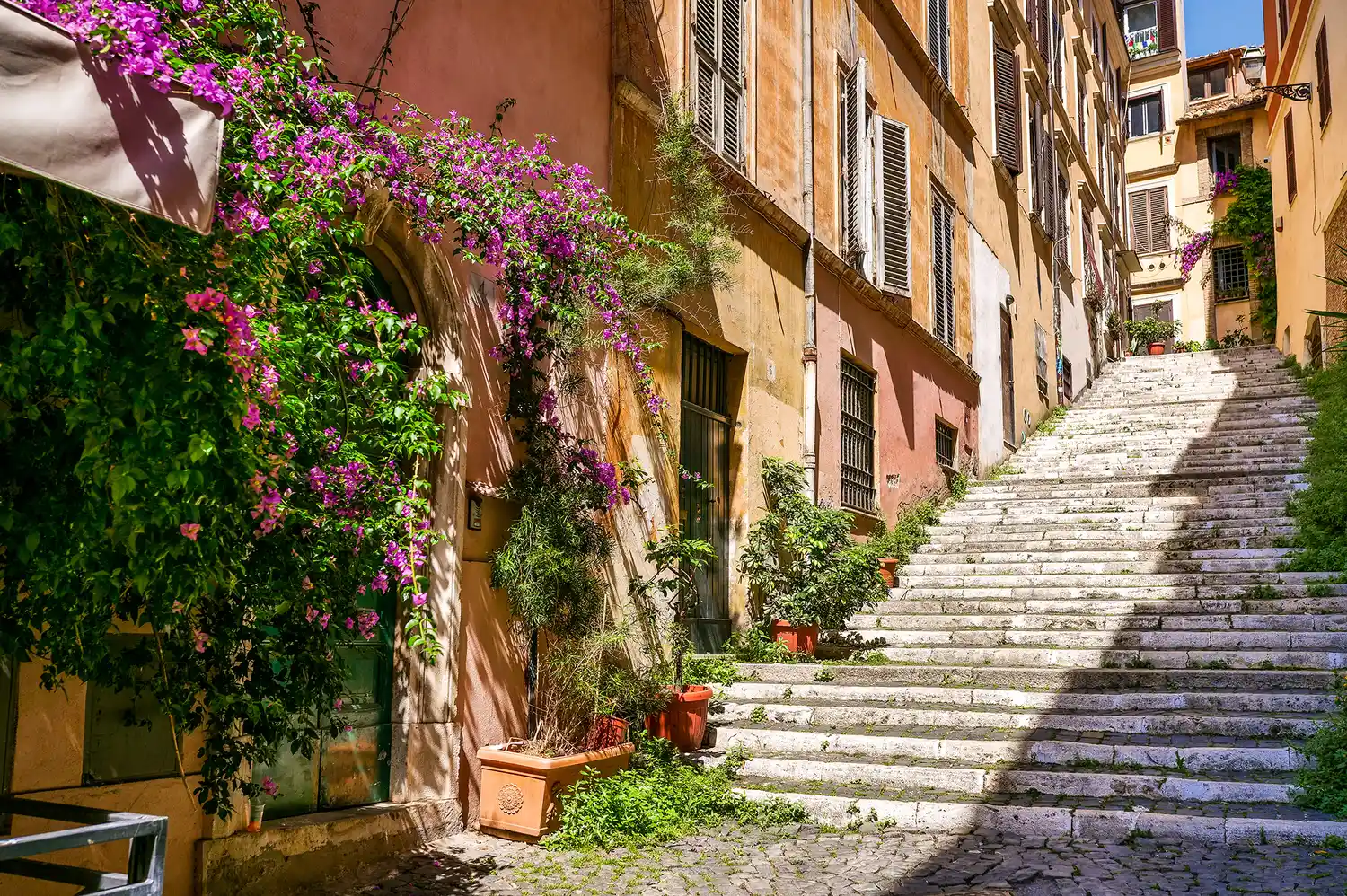
Monti is where the soul of Rome currently resides. Historically the "Suburra"—the gritty, crowded neighborhood of ancient Rome—it has transformed into a sophisticated enclave of narrow cobblestone streets and ivy-draped facades. While tourists swarm the nearby Via dei Fori Imperiali, Monti remains a sanctuary for local artisans, vintage collectors, and lovers of a slow aperitivo.
Life here centers around the Piazza della Madonna dei Monti. Sit by the fountain in the late afternoon and you’ll see the "real" Rome: students debating over espresso, elderly nonnas watching the world go by, and the soft clinking of glasses from nearby wine bars like Ai Tre Scalini. It is a place to get lost purposefully, popping into boutiques like Pifebo for vintage finds or staying at the newly opened Casa Monti for a taste of Roman luxury that feels deeply personal.
3. Janiculum Hill: The Midday Cannon and the Great View
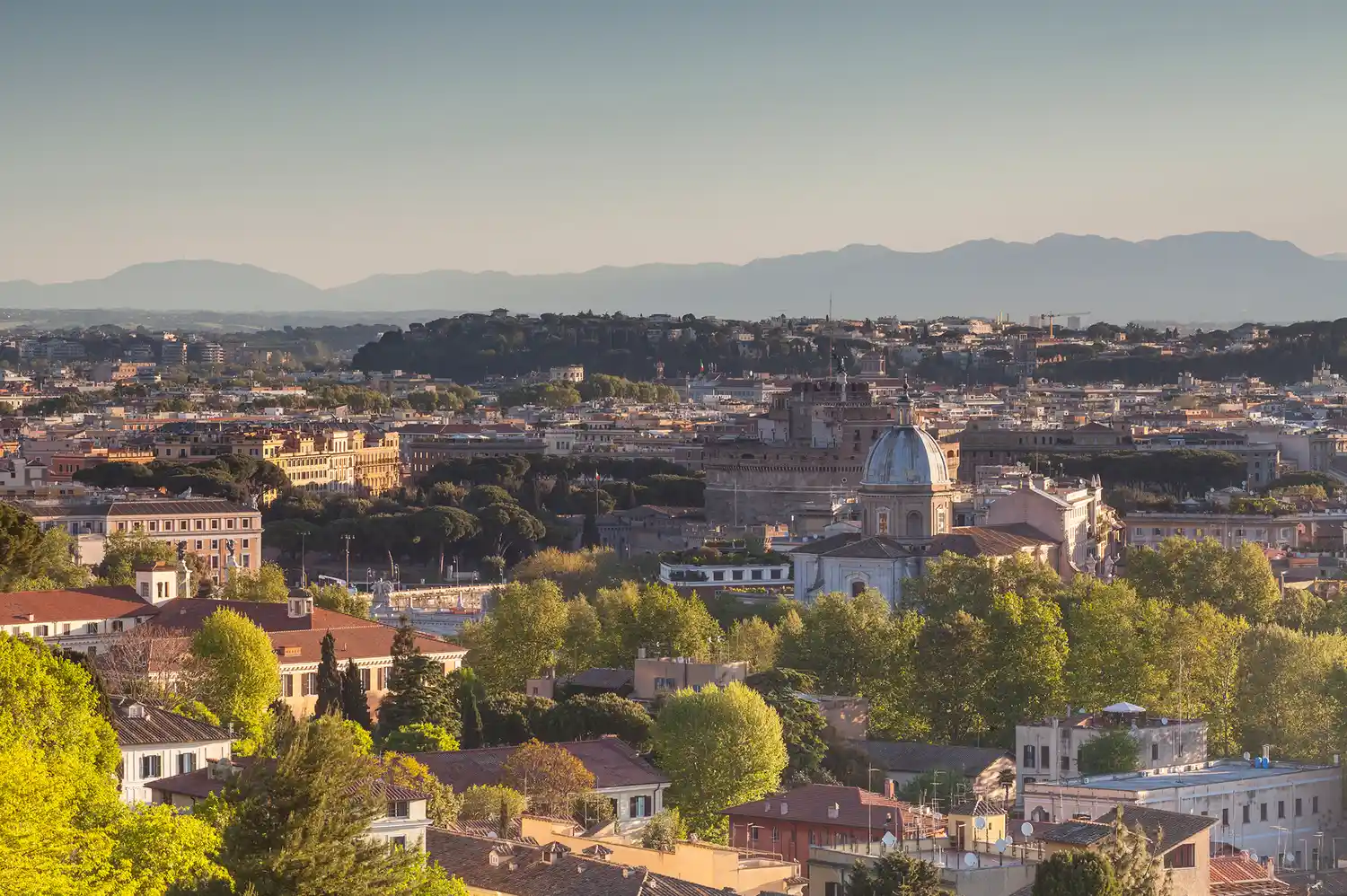
While the Pincio Terrace near Piazza del Popolo is famous, the Janiculum (Gianicolo) offers a more profound, panoramic embrace of the city. Stretching from St. Peter’s Basilica to the Altare della Patria, the view from here captures the terracotta rooftops and baroque domes in a way that feels cinematic.
However, the Janiculum holds a secret for those who time their visit perfectly. Every day at precisely 12:00 PM, a blank shell is fired from a cannon beneath the statue of Giuseppe Garibaldi. This tradition dates back to 1847, initiated by Pope Pius IX to ensure all the church bells of Rome rang in unison. Originally located at Castel Sant’Angelo, the cannon was moved to the Janiculum in 1904. Hearing the thunderous boom echo across the Tiber is a visceral connection to the city's 19th-century history.
4. Aventine Hill: The Knights of Malta Keyhole & Orange Garden
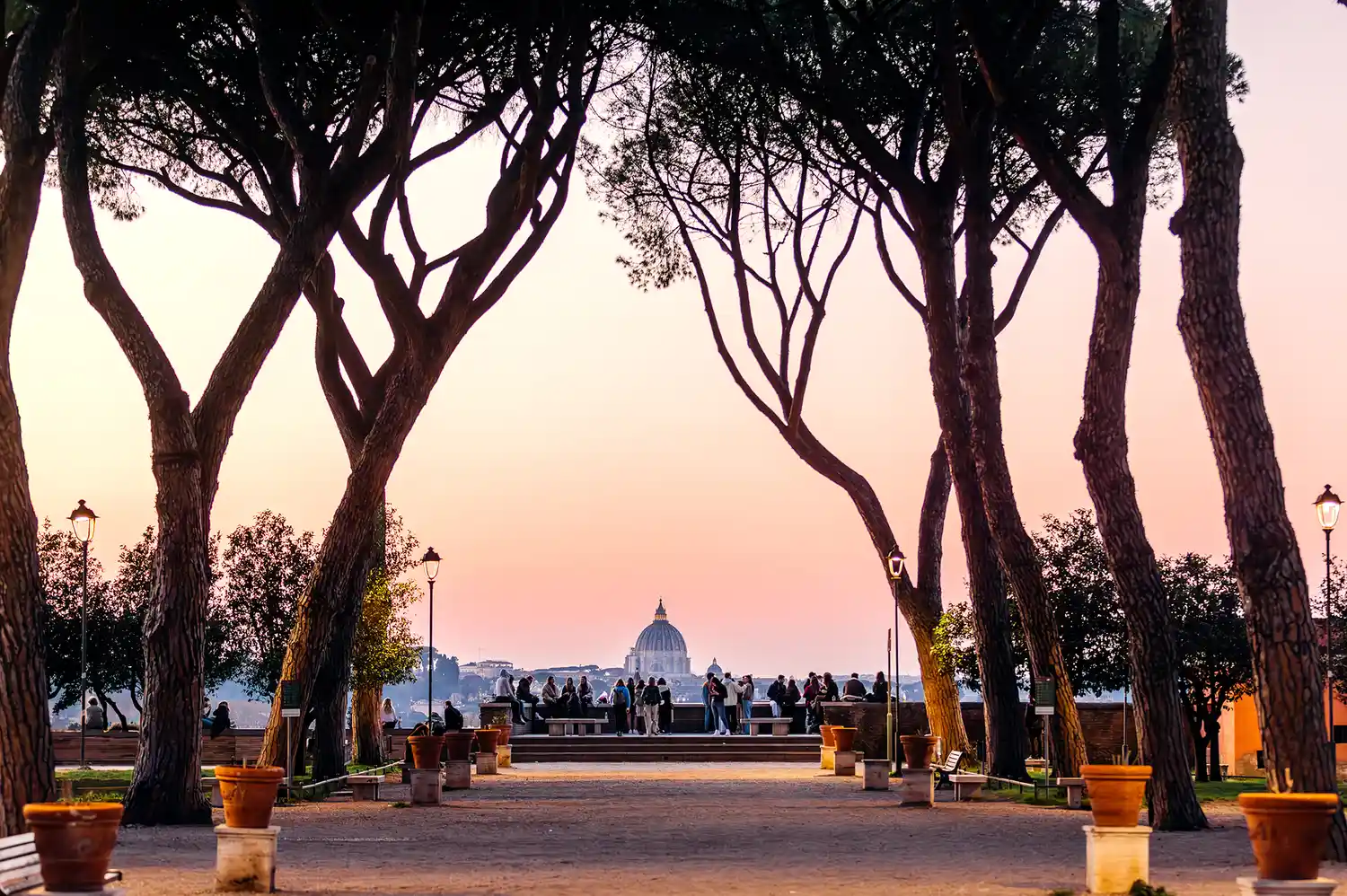
The Aventine is the southernmost of Rome's seven hills, and it possesses a quiet, aristocratic dignity. Most travelers come for one specific thing: the Knights of Malta Keyhole. Peering through the small brass hole in the green door of the Priory of the Knights of Malta, you are treated to a perfectly framed, miniature view of the dome of St. Peter’s Basilica, lined by manicured hedges. It is a moment of pure, optical delight.
But the true sensory heart of the hill is the Giardino degli Aranci (the Orange Garden). This small park, perched on the edge of the hill, is filled with the fragrance of bitter orange trees. It is one of the most romantic spots in the city, especially during the golden hour. Adjacent to it is the Basilica of Santa Sabina, a 5th-century masterpiece of early Christian architecture that remains blissfully silent compared to the grand cathedrals across the river.
5. Baths of Caracalla: Grandeur Without the Colosseum Lines
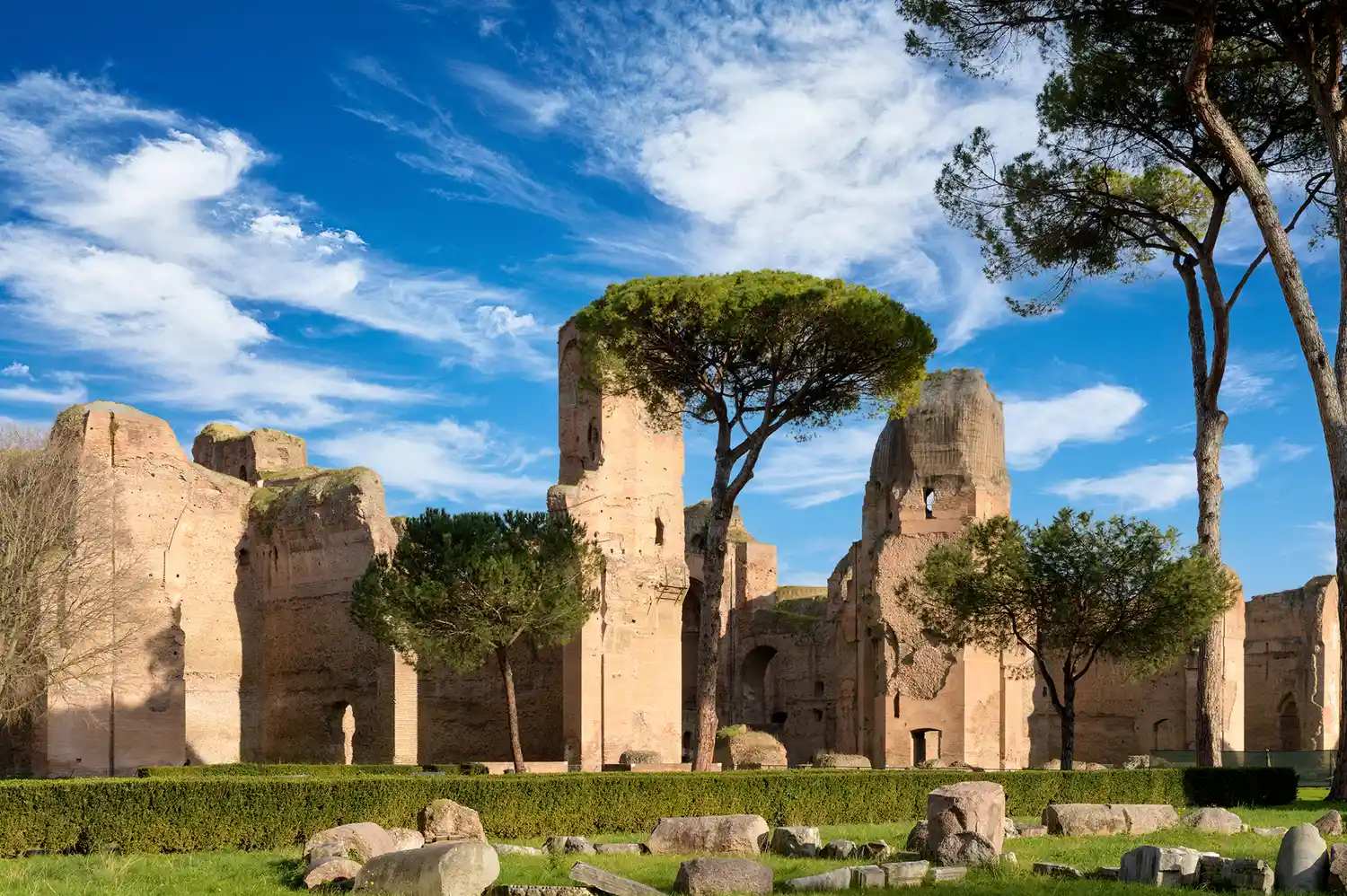
If the Colosseum represents the spectacle of Rome, the Baths of Caracalla represent its lifestyle. Completed in 216 AD, this was more than a place to wash; it was a sprawling leisure complex with libraries, gymnasiums, and gardens. Today, the soaring brick walls still reach toward the sky, giving you a tangible sense of the monumental scale of Roman engineering.
Despite their size, the Baths of Caracalla see an estimated 60-70% reduction in tourist density compared to the major landmarks. You can walk through the vast halls, once covered in polychrome marble and intricate mosaics, without the elbow-to-elbow friction of the Vatican Museums.
| Feature | The Colosseum | Baths of Caracalla |
|---|---|---|
| Crowd Level | Extremely High (Millions/year) | Low to Moderate |
| Wait Time | 1-2 hours (without skip-the-line) | Minimal to none |
| Atmosphere | Energetic, iconic, busy | Contemplative, monumental, quiet |
| Key Attraction | Gladiatorial history | Ancient engineering & daily life |
6. Ostia Antica: The Roman Pompeii by the Sea
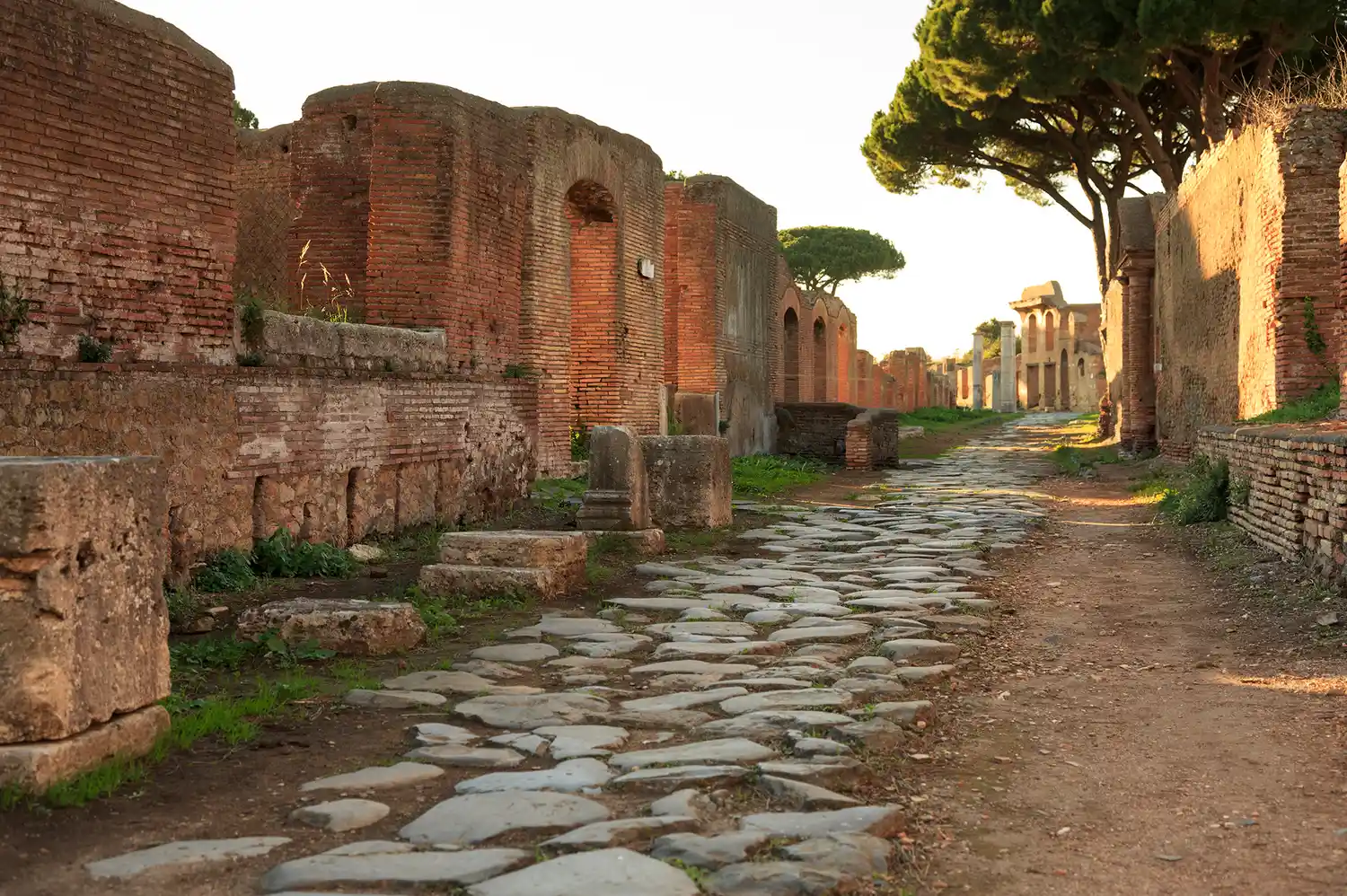
While many travelers spend hours on a train to Pompeii, the "Roman Pompeii" is actually just 25 minutes from the city center by local train. Ostia Antica was the thriving port city of Ancient Rome. Because it was abandoned rather than destroyed by a volcano, the preservation is remarkable—and far more accessible for an authentic 2024 trip.
Walking through Ostia feels like stepping directly into the daily life of an ancient citizen. You can explore the multi-story apartment blocks (insulae), the communal latrines, the bakery with its grinding stones still in place, and the theater that still hosts performances today. Don’t miss the Castle of Pope Julius II nearby, a Renaissance fortification that recently gained fame as a filming location for Emily in Paris.
7. Park of the Aqueducts: Engineering Meets Nature
On the southeastern edge of the city lies a landscape that feels pulled from a 19th-century romantic painting. The Parco degli Acquedotti is part of the Appian Way Regional Park and features the colossal ruins of seven ancient aqueducts, including the remarkably intact Aqua Felice.
This isn't a "tourist site" in the traditional sense; it is a living park. You will see local Romans cycling along the dirt paths, families picnicking under the shadow of the 2,000-year-old arches, and shepherds tending to their flocks. At sunset, the ancient stone glows a deep ochre against the backdrop of the Alban Hills, providing a photography opportunity that is unrivaled in its pastoral beauty.

8. Torre Argentina Cat Sanctuary: History Purr-fected
Located in the bustling heart of the city near the Pantheon, the Largo di Torre Argentina is an archaeological site that houses the ruins of four Republican-era temples and the remains of Pompey’s Theatre—the very site where Julius Caesar was assassinated in 44 BC.
Today, however, the site has a gentler purpose. It is home to approximately 150 feral cats who roam the ancient ruins. The Torre Argentina Cat Sanctuary is run by volunteers who manage a trap-neuter-return program and facilitate international adoptions. Visitors can watch the cats sunning themselves on the same stones where history was once made. It is a whimsical, poignant reminder of how Rome continues to repurpose its past.
Practical Tips for Your 2024 Authentic Trip
- Best Time to Visit: To avoid the peak heat and the heaviest crowds, aim for the "shoulder seasons" of April, May, September, and October. The light is softer, and the air is perfect for the long walks these hidden gems require.
- The Metro B Strategy: Many of these spots—the Baths of Caracalla, Ostia Antica (via connection at Piramide), and San Clemente—are easily accessible via Metro Line B. It is generally less crowded than Line A.
- Booking Requirements: While these gems are "hidden," 2024 has seen a surge in travel. Always check if sites like the Vicus Caprarius (the Water City under the Trevi) or specific tours of San Clemente require a WhatsApp or online reservation at least 48 hours in advance.
FAQ
Q: Are these hidden gems safe to visit alone? A: Absolutely. Rome is generally a very safe city for solo travelers. Sites like the Park of the Aqueducts are best visited during daylight hours, as they are large, open spaces, but the urban neighborhoods like Monti are vibrant and safe well into the evening.
Q: Do I need a car to reach Ostia Antica or the Park of the Aqueducts? A: No car is necessary. For Ostia Antica, take the Roma-Lido train from the Piramide station (included in a standard metro ticket). For the Park of the Aqueducts, take Metro Line A to the Giulio Agricola stop and walk about ten minutes.
Q: Is there an entrance fee for the cat sanctuary? A: The Largo di Torre Argentina ruins have a small entrance fee to walk the new boardwalks, but the cat sanctuary itself is free to visit, though donations are warmly welcomed by the volunteers to help care for the residents.
Rome is a city that rewards the curious. In 2024, the most authentic experiences aren't found by standing in line, but by following the curve of an ancient wall or the sound of water flowing beneath the earth. Step away from the crowds, and let the Eternal City tell you its secrets.