To step off a plane at Martinique Aimé Césaire International Airport is to experience a delightful cognitive dissonance. You are in the heart of the Lesser Antilles, surrounded by the warm, salt-tinged breeze of the Caribbean, yet the first signs you see are in French, the currency in your pocket is the Euro, and the boulangeries in the terminal smell indistinctly of butter and yeast. This is the "Island of Flowers," a place where the sophisticated structure of the French Republic blends seamlessly with the vibrant, resilient soul of the West Indies.
Martinique is a unique French overseas territory in the Caribbean where European sophistication meets tropical beauty. It is a fully integrated département of France, meaning it shares the same laws, education system, and passion for gastronomy as Paris or Lyon, yet its heart beats to the rhythm of the beguine and the tradition of Creole storytelling. Beyond the postcard-perfect beaches, the island offers a complex tapestry of volcanic landscapes, a world-renowned rum culture with protected A.O.C. status, and a poignant history etched into its very soil.
Quick Facts for the Discerning Traveler
- Political Status: French Overseas Department (DOM) and Region.
- Currency: Euro (€).
- Language: French (official) and Martinican Creole.
- Time Zone: Atlantic Standard Time (UTC -4).
- Driving: On the right side of the road, with excellent French-standard infrastructure.
- Signature Export: Rhum Agricole—the only rum in the world with an Appellation d’Origine Contrôlée (A.O.C.) designation.
Planning Your Visit: Best Time & Logistics
Timing is everything when navigating the tropics. While Martinique is a year-round destination, discerning travelers often look for the sweet spot between the humidity of the wet season and the crowds of the winter holidays.
The best time to visit Martinique is between April and May. During this window, you’ll enjoy average temperatures in the high 70s to low 80s, providing the perfect climate for both mountain hiking and coastal lounging. This period also allows you to avoid the peak hurricane season (which typically runs from June through November) and the highest tourist spikes seen from December to March.
Navigating to the island has become increasingly accessible. Travelers from North America can often find direct connections via Miami on American Airlines, while those coming from Europe benefit from multiple daily flights from Paris-Orly and Charles de Gaulle via Air France or Air Caraïbes. Once on the ground, the island's infrastructure is some of the best in the Caribbean, though the mountainous terrain requires a sturdy rental car and a bit of confidence behind the wheel.
Exploring the Volcanic North: Nature and History
The northern half of Martinique is dominated by the majestic and formidable Mount Pelée. Rising to over 4,500 feet, this active volcano is the island's highest point and a primary architect of its geography. For those who seek adventure, hiking Pelée is a rite of passage.
The 'Aileron' trail is the most popular route for hikers. It offers panoramic views of the Atlantic and Caribbean coastlines—provided the mountain's frequent mist clears. The volcanic soil here is incredibly fertile, creating a "volcanic terroir" that influences everything from the lushness of the ferns to the flavor profile of the local sugar cane.
Editor’s Tip: If you plan to summit Mount Pelée, start your hike at dawn (around 6:00 AM). The clouds usually roll in by mid-morning, obscuring the view, and the midday heat can be punishing.
At the foot of the volcano lies Saint-Pierre, a city often referred to as the "Little Paris of the Caribbean." In 1902, Mount Pelée erupted in a catastrophic event that leveled the city in minutes, leaving only one survivor. Today, Saint-Pierre is a poignant living museum. You can walk among the ruins of the 18th-century theater and visit the Volcanic Museum (Musée Volcanologique) to see haunting artifacts—melted glass, stopped clocks—that tell the story of a city frozen in time.
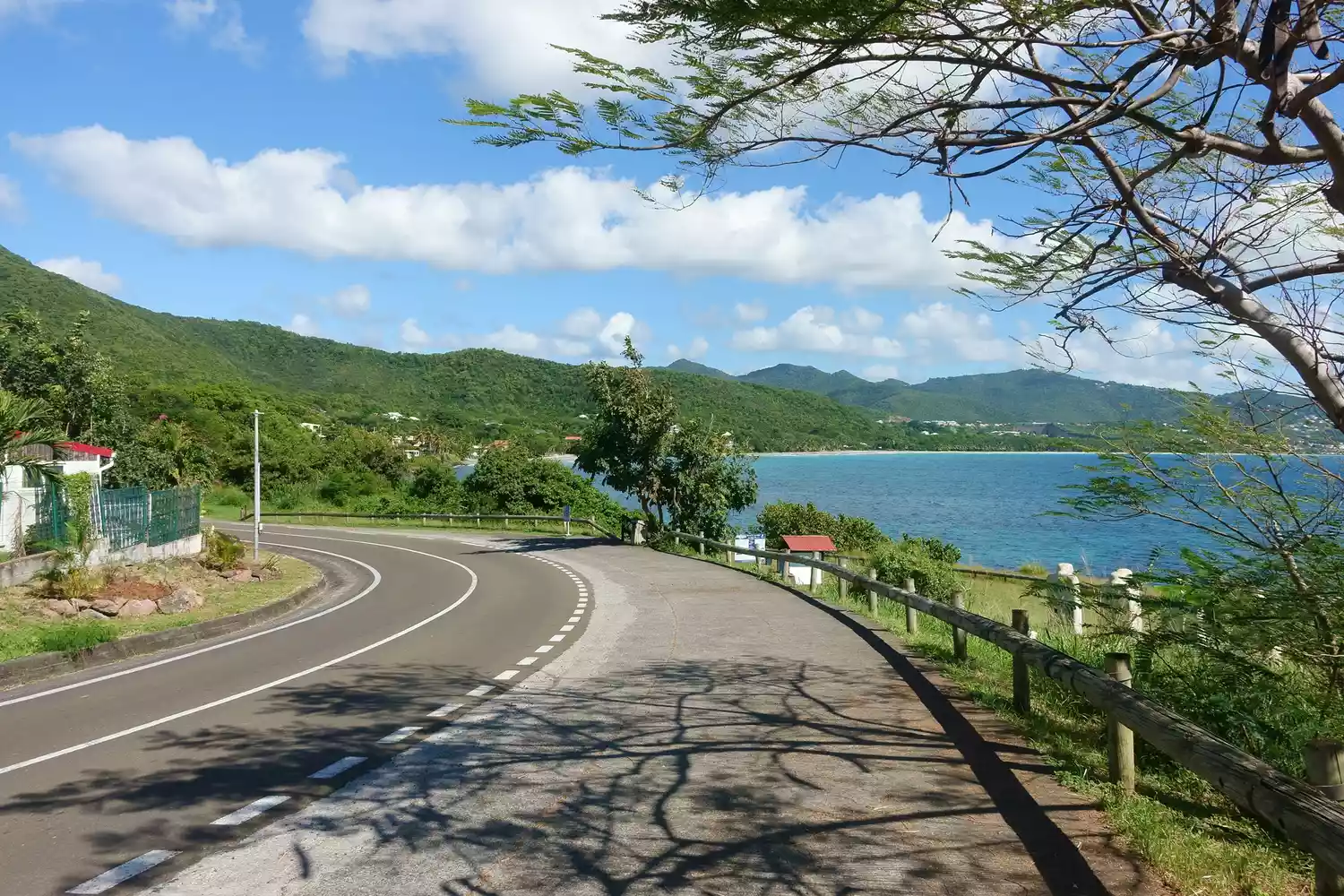
To reach the north from the capital, Fort-de-France, take the Route de la Trace. This historic winding road cuts through the heart of the rainforest. It is a masterclass in Caribbean biodiversity, flanked by towering bamboo, giant tree ferns, and vibrant heliconias.
Botanical Wonders & Cultural Heritage
Martinique’s nickname, "Madinina" (Island of Flowers), is best validated at the Balata Botanical Gardens. Located just outside the capital, this 7-acre private estate is a major biodiversity hub for the island. It features a curated collection of over 3,000 tropical plant species, including exotic orchids and bromeliads. One of the highlights is the treetop suspension bridge, which allows you to walk through the canopy for a literal bird’s-eye view of the flora.
However, Martinique’s beauty is often juxtaposed with a complex social history. To understand the island's soul, one must look toward its south-western coast.
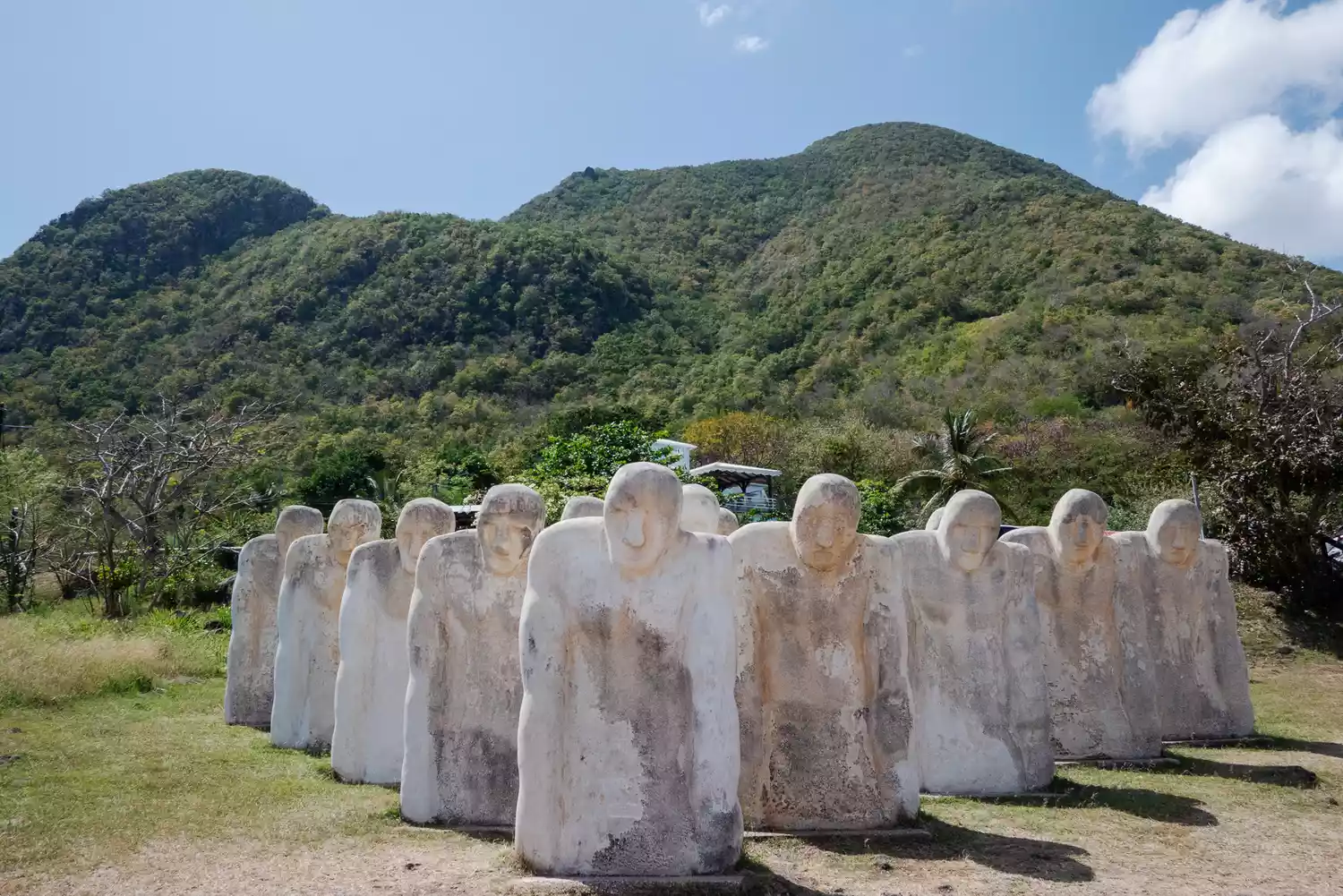
The Anse Cafard Slave Memorial is perhaps the most moving site on the island. Overlooking the sea near Le Diamant, 20 white stone effigies stand in a V-shape, facing the ocean. They commemorate an 1830 shipwreck of an illegal slave ship that struck the nearby cliffs. The statues, carved by local artist Laurent Valère, are massive, somber figures that serve as a permanent tribute to the ancestors of the Martinican people.
For a deeper dive into colonial and post-slavery history, La Savane des Esclaves in Trois-Îlets offers an open-air museum experience. Here, you can learn about traditional medicinal plants, the construction of "case" (traditional huts), and the grueling reality of life on a plantation.
The Spirit of Martinique: Rhum Agricole
In the world of spirits, Martinique occupies a rarified space. It is the only region in the world to hold the prestigious French A.O.C. (Appellation d’Origine Contrôlée) designation for its rhum agricole.
Unlike most rums produced from molasses (a byproduct of sugar refining), rhum agricole is distilled directly from fresh-pressed sugarcane juice. This process preserves the "grassy," earthy, and floral notes of the cane itself. Approximately 12 historic distilleries operate across the island, each with its own micro-climate and character.
- Habitation Clément: More than just a distillery, this is a cultural landmark. It features a world-class contemporary art gallery and stunning botanical gardens. It was also the site of the 1991 summit between Presidents George H.W. Bush and François Mitterrand.
- Rhum J.M: Located in the far north, this distillery benefits from the rich volcanic soil of Mount Pelée. Their aging process creates a deep, complex spirit that is highly prized by collectors.
Drinking rum in Martinique is a ritual. You don’t just order a drink; you "prepare" a Ti’ Punch. It is a simple but sacred blend of white rum, a squeeze of lime, and a spoonful of cane syrup. Locals will tell you, "Chacun prépare sa propre mort" (Everyone prepares their own death), meaning you should mix it to your own specific strength.
Southern Shores: Beaches and Marine Life
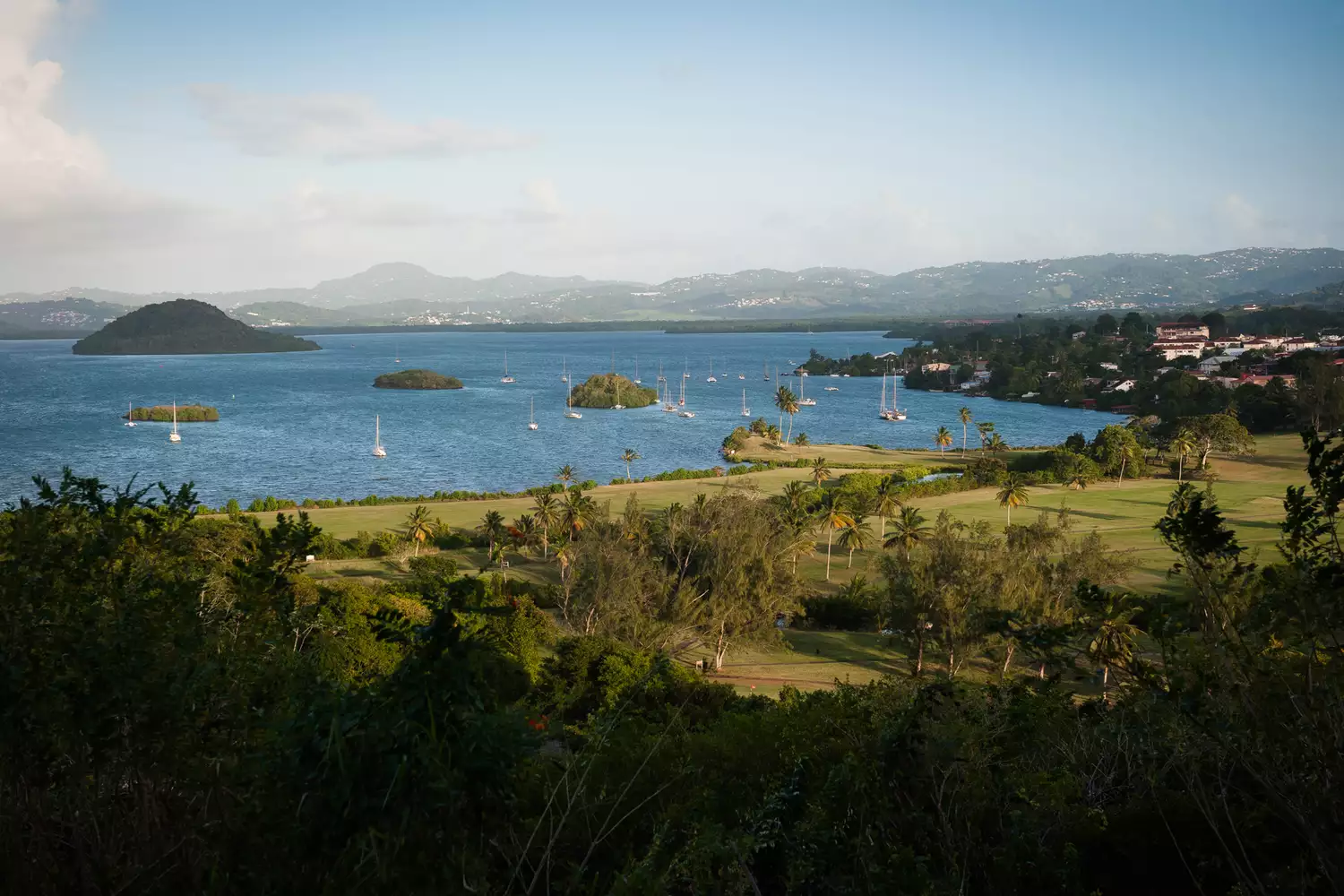
The southern coast is where Martinique’s classic Caribbean charm shines. The landscape softens into rolling hills and calm, turquoise bays.
Le Diamant & Diamond Rock The town of Le Diamant is famous for the towering basalt rock that sits two miles offshore. This 575-foot formation was once commissioned as a sloop by the British Royal Navy during the Napoleonic Wars. Today, it is a protected nesting site for seabirds and a premier destination for advanced scuba divers.
The Contrast of Sands Martinique offers a rare geological treat: the ability to visit a black sand beach and a white sand beach within minutes of each other.
- Anse Noire: A dramatic cove with jet-black volcanic sand and excellent snorkeling.
- Anse Dufour: Directly adjacent, this beach features classic golden-white sand and is famous for its resident sea turtles that feed in the shallow seagrass.
Gastronomy: A Fusion of Flavors
Dining in Martinique is an exercise in French technique meeting Caribbean spice. The local cuisine is a sophisticated "Creole-fusion" that prioritizes fresh seafood and tropical tubers.
Signature Dishes to Try:
- Colombo: A fragrant curry made with turmeric, cumin, and coriander, usually featuring chicken or goat.
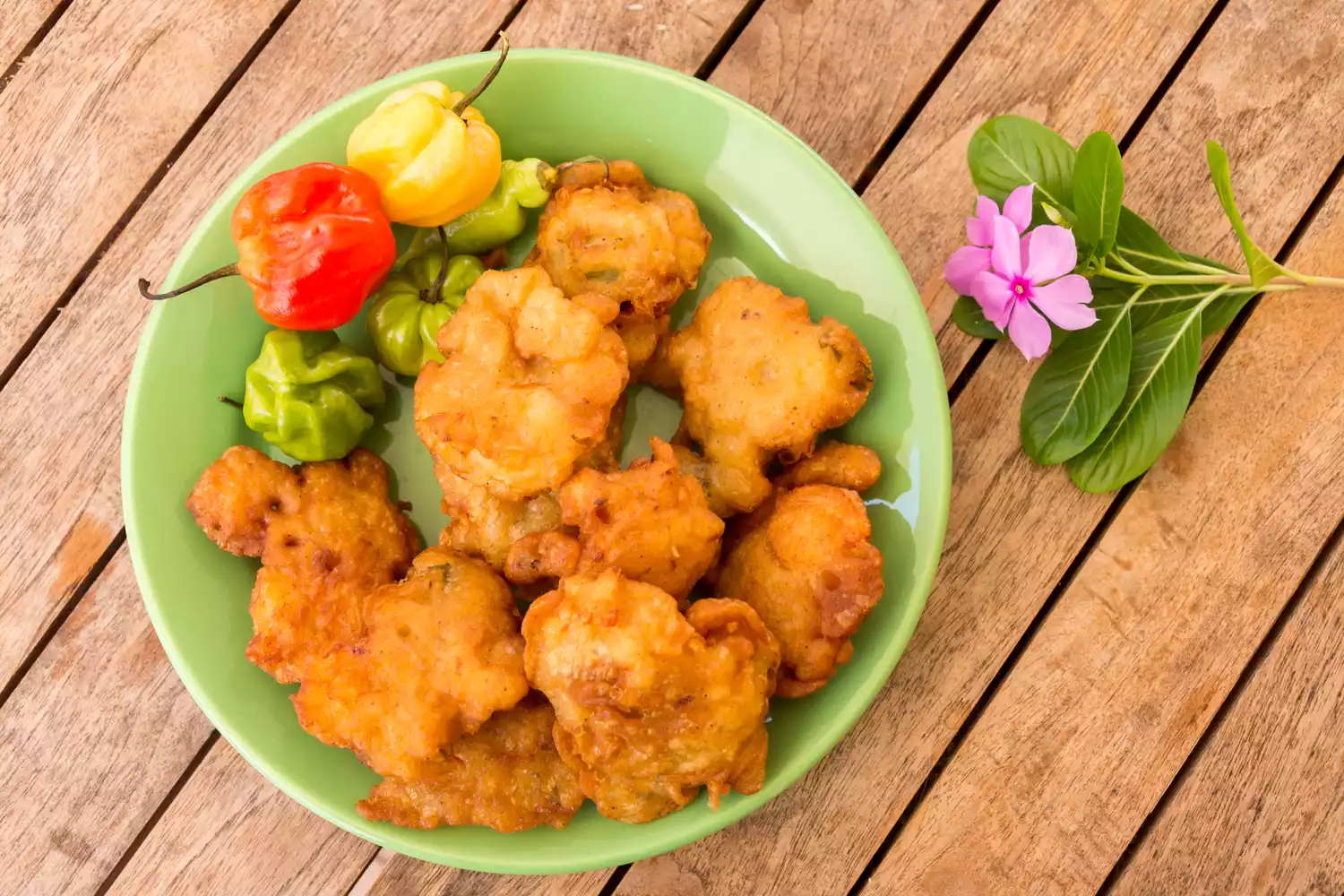
- Accras de morue: These light, crispy salt cod fritters are the ubiquitous appetizer of the island.
- Terrine de lambi: A refined take on conch, often served as a pâté or in a savory tart.
For a high-end experience, look for waterfront dining at Chill on Diamond Beach. If you prefer a more "toes-in-the-sand" atmosphere with expert culinary execution, Le Petibonum in Le Carbet is legendary, run by the charismatic Chef Guy Ferdinand (the "Chef in Shorts").
Getting Around the Island
To truly experience Martinique, independence is key. While the island is small, its topography is varied, and public transport is not designed for the leisure traveler.
| Transport Mode | Best For | Notes |
|---|---|---|
| Car Rentals | Exploring the North & South | Essential. Agencies like Budget and Avis are at the airport. Book in advance. |
| Vedettes (Ferries) | Crossing the Bay | A scenic 20-minute ride connecting Fort-de-France to Trois-Îlets. |
| Taxicos | Local flavor | Collective taxis that run on set routes. Inexpensive but follow no strict schedule. |
The roads are well-maintained (paved to French standards), but be prepared for steep inclines and hairpin turns in the northern rainforest. Driving here is an adventure that rewards you with hidden viewpoints and roadside fruit stands selling the sweetest pineapples you will ever taste.
FAQ
Do I need a visa to visit Martinique? As a French territory, Martinique follows the Schengen Area visa rules. US, Canadian, and EU citizens typically do not need a visa for short stays (up to 90 days), though a valid passport is required. Always check the latest French consulate requirements before booking.
Is English widely spoken? While French is the official language, English is spoken in most major hotels and tourist hubs. However, knowing a few basic French phrases (Bonjour, Merci, S’il vous plaît) goes a long way in showing respect for the local culture and will often lead to a warmer welcome.
Is the water safe to drink? Yes, tap water in Martinique is generally safe to drink and meets French national health standards. However, if you are hiking in the mountains, stick to bottled water or treated supplies.
Martinique remains one of the Caribbean’s best-kept secrets for those who value cultural depth as much as natural beauty. Whether you are standing atop a volcano, sipping a 15-year-old aged rum, or watching the sunset over the Caribbean Sea from a luxury villa, the island offers a refined, European-inflected escape that stays with you long after the tan lines fade.