Quick Facts
- The Big Event: A powerful G4-class geomagnetic storm is currently impacting Earth, triggered by a massive X5.1 solar flare and multiple coronal mass ejections (CMEs).
- Peak Viewing Time: The most intense activity began following a CME impact at approximately 3 PM EST on November 12; optimal viewing starts as soon as total darkness falls.
- Southern Reach: Under G4 conditions, the aurora borealis can potentially be seen as far south as the central United States and even the US-Mexico border.
- The "Camera Secret": Modern smartphones can often capture vibrant greens and reds that appear only as a faint gray mist to the naked eye.
- Success Probability: Travelers heading to high-latitude destinations like Fairbanks, Alaska, have a staggering 90% statistical probability of seeing the lights if they stay for at least three nights.
Aurora chasers, it is time to charge your camera batteries, grab your heaviest parkas, and prepare for a long night of sky-watching. If you have been waiting for the perfect moment to see the celestial dance of the northern lights from the comfort of the lower 48 states, tonight is your night. Following a series of dramatic eruptions on the solar surface, a high-level geomagnetic storm is currently underway, turning the night sky into a canvas of shimmering emerald, violet, and rare crimson.
The best time to see the northern lights tonight is as soon as darkness falls, following the impact of a third coronal mass ejection (CME) that reached Earth at approximately 3 PM EST on November 12. Unlike smaller events that require you to be near the Canadian border, this G4-level event is powerful enough to push the "auroral oval" much further south. Whether you are in the Northwoods of Minnesota or the high deserts of the Southwest, the potential for a spectacular show is at a multi-year high.
Why Tonight’s G4 Geomagnetic Storm is Special
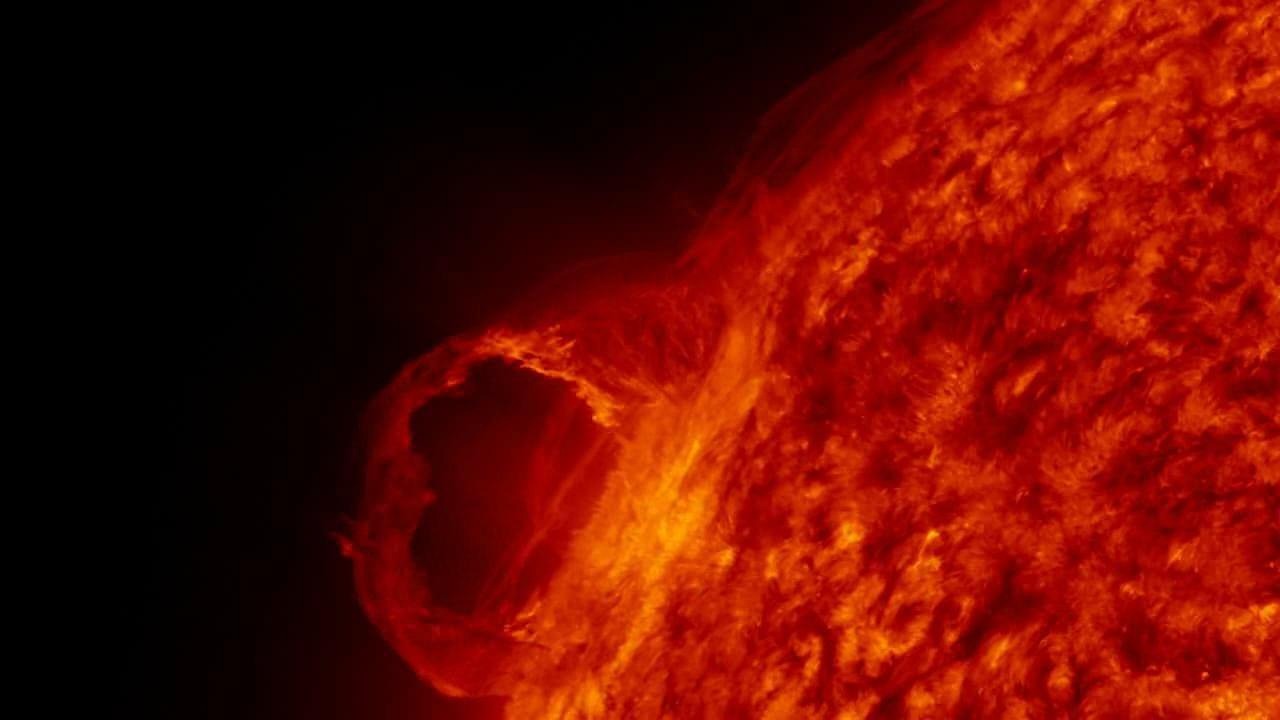
What we are witnessing tonight is the result of an incredibly active sun. Since November 9, the sun has erupted with five major X-class solar flares, reaching a peak intensity of X5.1. These flares are the most powerful type of solar explosions, and when they are accompanied by a Coronal Mass Ejection (CME)—a massive cloud of solar plasma and magnetic fields—they can trigger significant geomagnetic storms upon reaching Earth.
The current G4 geomagnetic storm watch is a direct result of these solar fireworks. For context, geomagnetic storms are ranked on a scale from G1 (Minor) to G5 (Extreme). A G4 storm is considered "Severe." During such an event, the aurora can be seen as far south as the central United States and even the US-Mexico border. In these southern latitudes, the aurora often manifests as a deep red glow on the northern horizon, a result of solar particles interacting with oxygen at extremely high altitudes.
This level of activity is rare and typically occurs only during the "Solar Maximum," the peak of the sun's 11-year cycle. With the sun currently in this highly active phase, tonight represents one of the best opportunities in November 2024 to witness the aurora borealis without needing a passport or a flight to the Arctic Circle.
What Time Can You See the Northern Lights Tonight?
Timing is everything when it comes to "hunting" the aurora. While the third and most significant CME reached Earth at approximately 3 PM EST on November 12, the display is not a constant light show. It behaves more like a tide, with waves of intensity that ebb and flow throughout the night.
The most critical factor is darkness. You should plan to be at your viewing location as soon as the sun has completely set and the "astronomical twilight" has ended. For most of the US, the prime viewing window is between 10 PM and 2 AM local time, though under G4 conditions, brilliant displays can occur early in the evening.
To track the storm in real-time, expert hunters rely on several key metrics. The "Kp-index" is a scale from 0 to 9 used to characterize the magnitude of geomagnetic storms. A Kp-index of 7 or higher is usually required for the lights to be visible in the mid-latitudes of the US.
| Kp Level | Visibility Latitude (US) | Typical Regions |
|---|---|---|
| Kp 5 (G1) | 52.2° N | Northern border (WA, MT, ND, MN) |
| Kp 6 (G2) | 48.3° N | Northern tier (ID, SD, WI, MI, ME) |
| Kp 7 (G3) | 44.4° N | Mid-latitude (OR, NE, IL, PA, NY) |
| Kp 8 (G4) | 40.5° N | Southern tier (CA, NV, MO, VA, NC) |
| Kp 9 (G5) | 36.6° N | Deep South (AZ, TX, FL) |
Keep an eye on the "Bz" value of the Interplanetary Magnetic Field (IMF). For the northern lights to "turn on," the Bz needs to be negative (pointing south), which allows the solar wind to connect with Earth's magnetic field. Many chasers use apps like SpaceWeatherLive or the NOAA Space Weather Prediction Center (SWPC) website to monitor these real-time charts.

Best US Viewing Locations for the Aurora Borealis
While a G4 storm opens the door for visibility across much of the country, your location's specific geography and light pollution levels will determine the quality of your experience. Here are the top-tier regions for catching the show tonight.
Alaska: The Gold Standard
If you want a guaranteed seat at the show, Alaska remains unbeatable. Fairbanks, located directly under the "auroral oval," offers a 90% statistical probability of seeing the northern lights if you stay for a minimum of three nights. Even during minor solar activity, the lights here often dance directly overhead in vibrant curtains of green and purple.

The Upper Midwest: Boundary Waters and Beyond
The Great Lakes region is one of the best places in the lower 48 to witness the aurora. Minnesota’s Boundary Waters Canoe Area Wilderness offers some of the darkest skies in the nation, providing a perfect obsidian backdrop for the lights. Similarly, Michigan’s Upper Peninsula (UP), particularly along the shores of Lake Superior, offers an unobstructed view of the northern horizon, where the lights often reflect off the water in a breathtaking double-display.
The West: National Parks and High Deserts
In the Western US, elevation and dry air are your best friends. Glacier National Park in Montana is a legendary spot for aurora hunters, with Lake McDonald serving as a popular foreground for photographers. Further south, Craters of the Moon National Monument in Idaho provides a stark, volcanic landscape that feels like another planet when illuminated by a G4 storm. Even in Washington and Oregon, getting away from the coastal clouds and into the high desert east of the Cascades will significantly increase your chances.
The Northeast: Maine’s Dark Sky Sanctuaries
For those on the East Coast, escaping the "I-95 glow" is essential. Katahdin Woods and Waters National Monument in Maine is one of the few International Dark Sky Sanctuaries in the region. Cherry Springs State Park in Pennsylvania is another hotspot; although it is further south, its famous "astronomy field" offers 360-degree views that are ideal for spotting the red auroral glow typical of G4 storms in these latitudes.
Pro-Tip: If you're planning a last-minute trip, consider booking a guided tour. Local experts often have access to private land away from crowds and know exactly which backroads lead to the best northern vistas. Find a Dark Sky Park Near You →
Tips for a Successful Aurora Chase
Quite a few stars need to align to make the magic repeat itself, and even during a G4 storm, preparation is the difference between a successful hunt and a cold, disappointing night in a parking lot.
- Find a Clear Northern Horizon: The aurora almost always begins as a glow in the north. If you have a mountain, a forest, or a city's light dome to your north, you might miss the show entirely. Look for a location with a low, flat horizon—large lakes or open fields are ideal.
- Escape the Light Pollution: This cannot be overstated. Even a G4 storm can be washed out by the orange haze of streetlights. Use a tool like "Light Pollution Map" to find "Bortle Class 1-3" skies.
- Weather is the Final Boss: Cloud cover is the aurora hunter’s greatest enemy. A 100% overcast sky means zero visibility, regardless of how strong the solar storm is. Check high-resolution satellite imagery (like Windy.com) to find gaps in the clouds.
- Dress for Sub-Zero Patience: Aurora hunting involves a lot of standing still. In places like Fairbanks, temperatures can plummet to -40°F. Even in the lower 48, November nights are biting. Use a 4-to-6 layer system: moisture-wicking base layers, insulating fleece or wool, and a windproof/waterproof outer shell. Don’t forget chemical toe warmers—they are a game-changer.

How to Capture the Lights on Camera
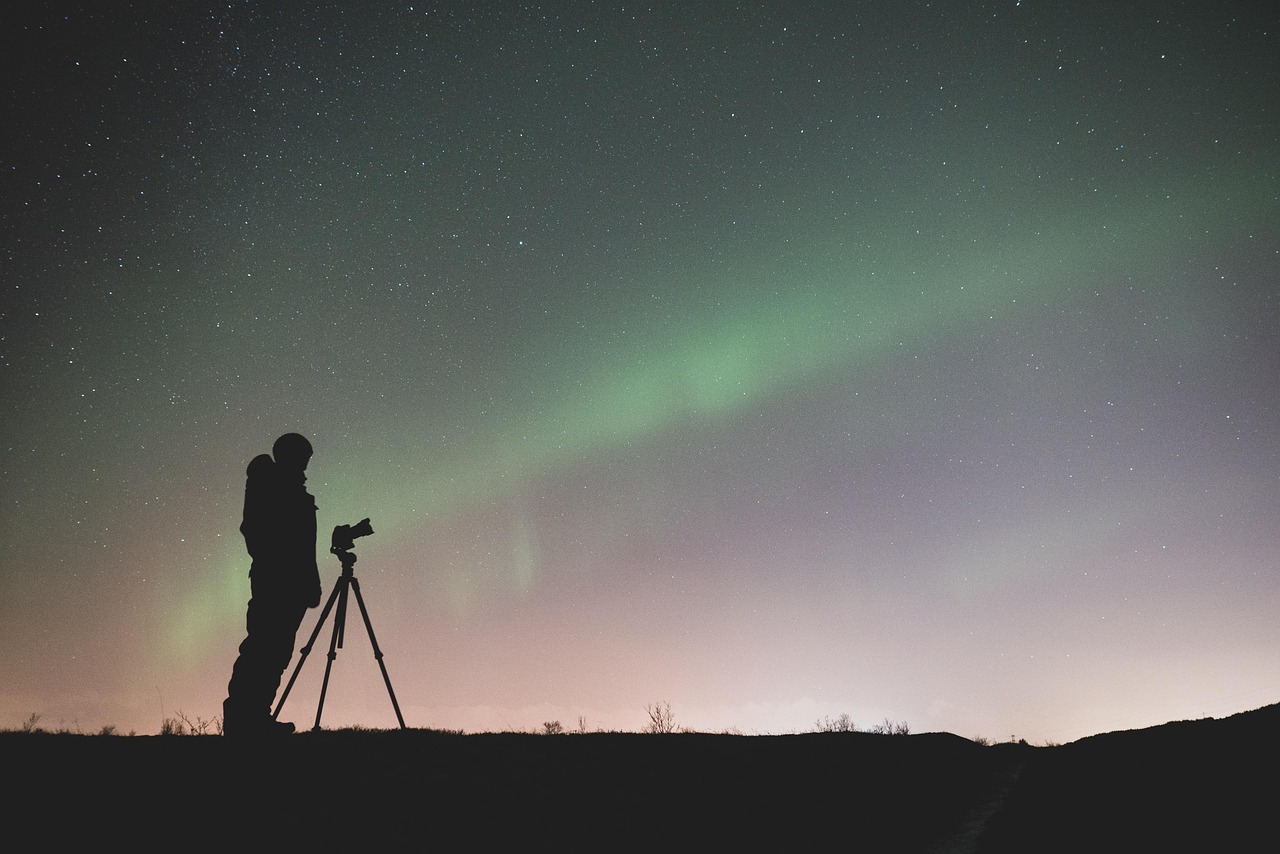
Many first-time chasers are surprised to find that the northern lights often look like faint, moving clouds to the naked eye. This is because the human eye is not very good at seeing color in low light. Your camera, however, can drink in that light over several seconds, revealing the brilliant purples and greens that define the experience.
For Smartphone Users
Most modern iPhones and Androids have a "Night Mode" that is surprisingly capable.
Smartphone Settings:
- Use a tripod or lean your phone against a stable surface (any movement will blur the image).
- Set your camera to 'Night Mode' and extend the exposure time to the maximum (usually 10-30 seconds).
- Turn off your flash.
- Focus on a distant star or the horizon.
For DSLR/Mirrorless Users
If you want professional-grade shots, you'll need a manual setup. Use a wide-angle lens (14mm to 24mm) with a fast aperture of f/2.8 or lower. Set your ISO between 1600 and 3200, and experiment with shutter speeds between 2 and 8 seconds. If the aurora is moving fast, use a shorter shutter speed to capture the "curtains"; if it is faint, go longer.
FAQ
Q: Will the northern lights be visible if it’s cloudy?
A: Unfortunately, no. The aurora happens 60 to over 200 miles above the Earth's surface, while clouds are only a few miles up. If it's cloudy, you’ll only see a dark sky or a weirdly colored glow if the aurora is exceptionally bright.
Q: Can I see the northern lights with the naked eye tonight?
A: Yes, during a G4 storm, the lights are often visible to the naked eye, appearing as shimmering curtains or a pulsating glow. However, the colors (especially reds and purples) are always more vivid through a camera lens.
Q: Do I need to stay up all night?
A: While the peak is often around midnight, geomagnetic storms are unpredictable. It is best to monitor real-time Kp-index apps. If the "Bz" drops and the Kp spikes, head outside immediately.
Experience the Magic Tonight
The combination of an X5.1 solar flare and a G4 geomagnetic storm creates a rare opportunity that no sky-watcher should miss. Tonight is about more than just a photo for social media; it is about witnessing the incredible power of our sun and the protective shield of our planet’s magnetic field.
Pack your thermos, find a dark corner of the world, and look north. The celestial dance is about to begin.