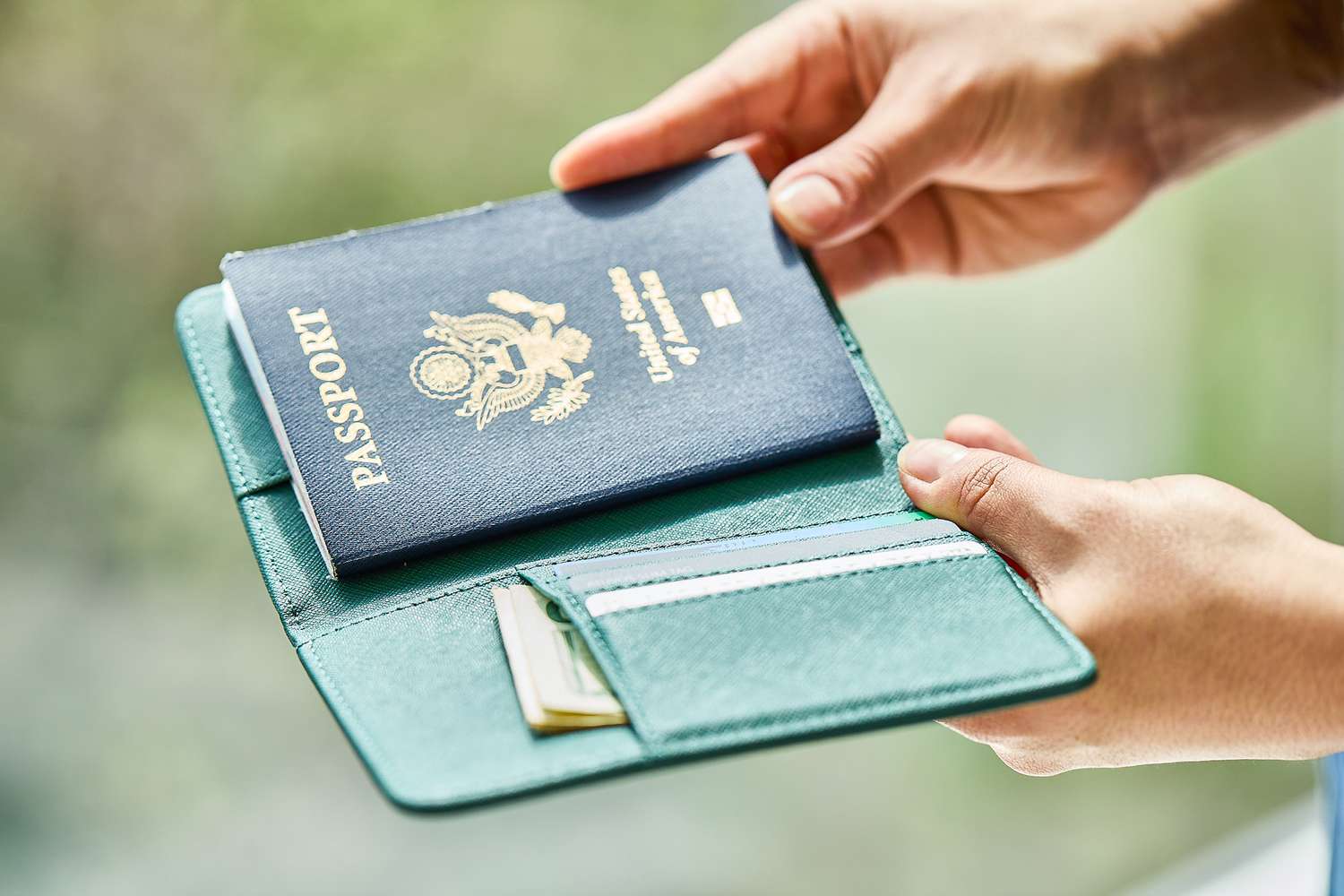
In a year where global aviation is projected to reach a record-breaking 5.2 billion passengers, the world is paradoxically becoming more partitioned for those holding what was once the ultimate golden ticket: the US passport. For decades, the American travel document was a symbol of unrivaled global mobility, a "frictionless" pass to nearly every corner of the map. However, the 2026 Henley Passport Index reveals a sobering reality for US citizens. While the desire to explore the world has never been higher, the diplomatic weight of the blue booklet is hitting a historic wall.
The era of "Passport Privilege" is undergoing a seismic shift. As we analyze the latest data, it becomes clear that global mobility is no longer a static hierarchy led by Western powers. Instead, it has become a fluid, often volatile, reflection of geopolitical reciprocity and domestic immigration stances. For the American traveler, the consequences are moving from theoretical policy shifts to tangible hurdles at international borders.
The 2026 Henley Passport Index: Hard Numbers
The 2026 rankings underscore a significant realignment of global power. For the third consecutive year, Singapore has maintained its position as the world's most powerful passport. Singaporean citizens now enjoy visa-free or visa-on-arrival access to 192 destinations. This isn't merely a statistical lead; it represents a masterclass in "open-door" diplomacy that has seen the city-state methodically expand its reach across both Western and Eastern hemispheres.
In stark contrast, the United States has continued its slow descent. Currently ranked 10th globally, the US passport provides visa-free access to 179 countries. While 179 may still sound like a high number, the trend line is what concerns analysts. A decade ago, the US shared the top spot with the UK. Today, it sits behind a phalanx of European and Asian nations, including Japan, South Korea, France, and Germany.
| Rank (2026) | Country | Visa-Free Destinations (2026) | 2014 Ranking (Comparative) |
|---|---|---|---|
| 1 | Singapore | 192 | 2 |
| 2 | Japan | 191 | 3 |
| 3 | France / Germany / Italy | 190 | 1 |
| 4 | South Korea / Spain | 189 | 5 |
| 5 | Austria / Finland / Sweden | 188 | 1 |
| 10 | United States | 179 | 1 |

The data suggests that while the rest of the world is racing toward greater connectivity, the US is stuck in a geopolitical "tug-of-war." The ranking reflects a decade of stagnant diplomatic expansion, while nations like the UAE and Singapore have aggressively pursued bilateral visa-waiver agreements.
Why is the US Passport Losing Its Power?
The decline is not a matter of administrative error but a direct consequence of "reciprocal diplomacy." For years, the US has maintained a stringent visa policy for many developing nations while expecting their borders to remain open to Americans. That era of one-sided accessibility is ending.
The most prominent example is Brazil. In 2024 and 2025, Brazil re-instituted visa requirements for US citizens after years of offering a unilateral waiver. The Brazilian government's stance was clear: if the US requires Brazilians to undergo rigorous interviews and pay high fees, Brazil will demand the same of Americans. This "tit-for-tat" approach is becoming the new global standard.
Beyond reciprocity, "America First" immigration policies have had a cooling effect on global mobility. As the US tightens its borders and implements more restrictive entry requirements—even for those in the Visa Waiver Program (VWP)—other nations are responding in kind.
"Global mobility is a two-way street," notes Dr. Christian Kaelin, Chairman of Henley & Partners. "You cannot expect the world to remain open to your citizens if you are systematically closing your doors to theirs. The US is currently learning that isolationist immigration policies carry a heavy price for the traveler."
The Widening 'Mobility Gap'
One of the most alarming trends in the 2026 report is the record-breaking "mobility gap." This metric measures the disparity between the most and least powerful passports in the world. In 2006, the gap between the top-ranked country and the bottom (Afghanistan) was 118 destinations. In 2026, that gap has ballooned to 168 destinations.
This widening chasm indicates a world divided into "high-trust" and "low-trust" zones. While citizens of Singapore or Japan can move across 90% of the globe without a prior visa, citizens of nations like Afghanistan, Syria, and Iraq are effectively locked out of the global economy, restricted to fewer than 30 destinations. The US, while still in the high-trust zone, is beginning to see its "trust score" eroded by increasingly complex security protocols and a lack of new visa-waiver partnerships.
'Open Borders, Closed Doors': The US vs. China Shift
To understand why the US is slipping, one must look at the "Inbound Openness Index." This index tracks how many nationalities a country allows to enter without a visa. This is where the contrast between the US and its geopolitical rivals is most jarring.
As of 2026, the United States permits only 46 nationalities to enter visa-free. In a strategic shift aimed at boosting tourism and soft power, China has expanded its visa-free access to 77 nationalities. This marks the first time in modern history that China’s "inbound openness" significantly outpaces that of the US.
- US Inbound Openness: 46 Nationalities (mostly European and high-income Asian allies)
- China Inbound Openness: 77 Nationalities (including a surge in European and Southeast Asian nations)
China's use of visa-free access is a "brass-knuckle" diplomatic tool. By opening its doors, Beijing is signaling a desire for global integration and tourism revenue, while the US remains focused on "Hard Borders." For the global traveler, this shift means that a trip to Shanghai is now administratively easier than a trip to San Francisco for millions of people worldwide.
The Future of Frictionless Travel: Proposed Restrictions
The friction for American travelers is set to increase in late 2025 and 2026. A proposal currently circulating among 42 allied nations—including the UK, France, and Japan—suggests new "enhanced screening" for US travelers in response to the US’s own increasingly intrusive entry requirements.
The proposed measures include:
- Social Media Disclosure: Requirement for US citizens to provide social media handles for the past five years.
- Biometric Pre-registration: Mandatory facial and fingerprint scanning 72 hours before departure.
- DNA Data Sharing: Limited proposals for biological data sharing for long-term stay visas.
If these measures are enacted, the "frictionless" experience of a weekend in London or Paris will be a thing of the past for Americans. European allies have expressed growing frustration with the US's ETIAS (European Travel Information and Authorisation System) delays and the perceived "hostility" of US CBP (Customs and Border Protection) towards their citizens.
Managing Geopolitical Risk: The Rise of the 'Plan B' Passport
The direct result of this volatility is the mainstreaming of "Investment Migration." Historically, secondary citizenships were the domain of the ultra-wealthy. In 2026, they have become a standard form of risk management for the American upper-middle class.
US nationals are now the single largest market for secondary residence and citizenship-by-investment programs. From Portugal’s Golden Visa to Malta’s citizenship path, Americans are seeking a "Plan B" to hedge against potential travel restrictions, political instability, and the shrinking power of their primary passport.
In a world where mobility is the ultimate currency, relying on a single government for your right to travel is increasingly seen as a high-risk strategy. As the US passport continues its descent in the rankings, the quest for a second "insurance" passport is no longer about tax optimization—it's about the freedom to move.
Frequently Asked Questions
Why is the US passport ranked lower than Singapore? The ranking is based on the number of destinations accessible without a prior visa. Singapore has secured more bilateral agreements and maintains a highly open "Inbound Openness" policy, which encourages other nations to reciprocate. The US has more restrictive entry requirements and has not signed a major new visa-waiver agreement in years.
Does the 10th-place ranking mean I need more visas now? Yes, in some cases. For example, countries like Brazil have reinstated visa requirements for Americans. Additionally, even for countries that don't require a full visa, new electronic authorizations (like Europe's ETIAS) add layers of bureaucracy that didn't exist a decade ago.
Is China’s passport more powerful than the US passport? No. While China has become much more "open" to visitors (allowing 77 nationalities in), the Chinese passport still ranks significantly lower than the US passport in terms of where its citizens can go. However, the gap is narrowing as China signs more mutual waiver agreements.
Final Takeaway
The 2026 data serves as a wake-up call. The US passport is still a potent tool, but its dominance is no longer guaranteed. In an era of "geopolitical reciprocity," the ease with which we see the world will increasingly depend on how the world is invited to see us. For the savvy traveler, the message is clear: the days of the "frictionless" American journey are being replaced by a new era of diplomatic complexity.